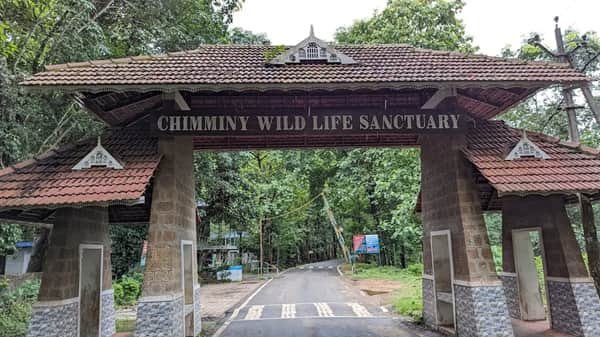
Chimmini Wildlife Sanctuary in Thrissur district is a Western Ghats destination where the forest, reservoir and trekking experience are closely connected. The protected area, also commonly spelled Chimmony, was established in 1984 and covers about 85 sq km according to the Kerala Forest Department. Evergreen, semi-evergreen and moist deciduous forest spread across the slopes, while the Chimmini River and dam create a large water body below the hills. This combination makes the sanctuary attractive not only for wildlife enthusiasts but also for walkers, birders and travellers who prefer guided outdoor activities.
Unlike a destination built around a single safari road, Chimmini offers several ways to experience the landscape. Kerala Tourism lists guided trekking, reservoir-linked activities and forest camping programmes. The Virakuthodu-Choorathala trek is one of the best-known day options, passing through rich butterfly and bird habitat towards Choorathala. For a good visit, it helps to decide in advance whether you want a short sightseeing stop, a three-hour trek or a longer organised programme, because the timing and cost are different for each.
Quick About Chimmini Wildlife Sanctuary
| Detail | Information |
| Location | Chimmini, Thrissur district, Kerala |
| Protected Area | Wildlife Sanctuary |
| Area | About 85 sq km |
| Established | 1984 |
| Habitat | Evergreen, semi-evergreen and moist deciduous forest |
| Known For | Trekking, birdlife, butterflies, reservoir and forest camps |
| Nearest Major City | Thrissur |
| Nearest Railway Station | Thrissur |
| Nearest Airport | Cochin International Airport |
| Best Period | October to March; November-December excellent for birding |
Chimmini Wildlife Sanctuary Timings
Kerala Tourism’s official ecotourism programme lists the Virakuthodu-Choorathala trekking window as 8:00 AM to 5:00 PM, with trekking tickets issued only until 2:00 PM. Individual activities may have earlier start times, so visitors should not assume every experience can be booked late in the day.
| Activity | Timing | Important Note |
| General trekking programme | 8:00 AM to 5:00 PM | Trek ticket issue only until 2:00 PM |
| Virakuthodu-Choorathala trek | Daytime guided slot | About 3 hours |
| Longer / special programmes | Programme-specific | Advance booking may be required |
Forest activities can be suspended or changed because of heavy rain, wildlife movement or operational conditions. Confirm availability before making a long journey.
Chimmini Wildlife Sanctuary Ticket Price
Kerala Tourism publishes a basic sanctuary entry fee along with a separate charge for the standard guided trek. These are useful reference rates for planning, while newer activity packages can carry different prices.
| Visitor / Activity | Published Charge |
| Indian adult entry | ₹15 |
| Student entry | ₹10 |
| Foreign visitor entry | ₹165 |
| Still camera | ₹55 |
| Video camera | ₹240 |
| Virakuthodu-Choorathala trek | ₹150 per person; minimum 3 persons |
| Overnight Anaporu package | Published separately; advance booking required |
Some newer ecotourism activities are priced as packages rather than simple entry tickets. The basic rates above should therefore not be used to estimate the cost of rafting, full-day treks or overnight camps.
What to See and Do at Chimmini Wildlife Sanctuary
Chimmini is particularly rewarding for travellers who want an active forest day. The reservoir creates broad open views while the trekking routes move into denser habitat, giving the visit more variety than a simple viewpoint stop.
Virakuthodu-Choorathala trek: This official guided route is about 5 km and takes roughly three hours. It is designed as a manageable day trek and is one of the easiest ways to experience the sanctuary beyond the entrance area.
Birdwatching: Kerala Tourism specifically highlights November and December for birders. More than a quick species count, the value here comes from moving slowly through different forest levels and listening for calls.
Butterflies: Chimmini is known for rich butterfly life, including large Western Ghats species. Sunny intervals after the wet season can be especially productive around forest edges.
Reservoir and boating-related experiences: Depending on current operations, water-based eco-activities may be available. These are managed programmes rather than unrestricted private boating.
Forest camping: Overnight programmes such as Anaporu combine trekking and time deeper in the forest. They are capacity-limited and should be reserved in advance.
Wildlife and Habitat
Chimmini’s vegetation changes with elevation and moisture. Evergreen forest occupies wetter stretches, while semi-evergreen and moist deciduous areas create additional habitat diversity. The wider sanctuary supports elephants, gaur, sambar, wild boar, macaques, langurs, giant squirrels and carnivores including leopard. Tigers have been recorded in the larger forest landscape, but an ordinary visitor should never expect a tiger sighting.
The sanctuary is also ecologically important because of its position near other protected forests in the Western Ghats. For visitors, this means the best observations often come from birds, butterflies, amphibians and plants rather than only large mammals.
How To Reach Chimmini Wildlife Sanctuary
By Road
The sanctuary is reached from the Thrissur side through roads towards Amballur and the Chimmini Dam area. Kerala Tourism lists the site around 26 km from Pudukkad Bus Station. A taxi or private vehicle is the easiest option when carrying trekking gear.
By Train
Thrissur Railway Station is the main railhead, roughly 38 km away on the official ecotourism listing. From the station, continue by taxi or road transport towards Chimmini.
By Air
Cochin International Airport is the nearest major airport, listed at roughly 63 km from Chimmini. Road travel time varies with traffic and the final rural approach.
At the Check Post
Reach early enough to complete entry formalities and meet the guide. If you plan to trek, arriving close to the 2:00 PM ticket cut-off can leave too little daylight for an unhurried experience.
Best Time to Visit Chimmini Wildlife Sanctuary
October to March is the most practical general season. The forest is fresh after the monsoon, temperatures are more comfortable and the chance of completing a full trek without heavy rain is better. November and December are particularly attractive for birdwatchers, a period specifically highlighted by Kerala Tourism.
The wet season has a very different beauty, with stronger streams and deep green vegetation, but trekking conditions can become slippery and some activities may stop temporarily. April and May are warmer; early starts become more important and longer treks can feel demanding in the afternoon.
How Much Time to Keep for the Visit
Allow four to five hours for a standard visit that includes registration, a guided three-hour trek and some time near the reservoir. A full-day programme needs the entire day, while overnight camping should be planned as a separate trip rather than added to an ordinary sightseeing schedule.
Visitor Facilities and Practical Tips
Reserve special packages early: Camping, full-day trekking and some water-based activities may have minimum group sizes and limited slots.
Wear trail shoes: The route can include wet rock, roots and uneven forest ground.
Carry a rain layer: Western Ghats weather can change quickly even outside the peak monsoon.
Use leech protection in wet months: Long socks and covered footwear are useful on damp trails.
Bring binoculars: Bird and butterfly observation is a major strength of Chimmini, so binoculars add real value.
Keep the day flexible: Forest staff may modify a route if wildlife activity or weather makes a particular section unsuitable.
Important Rules for Visitors
Guided routes should be treated as exactly that—guided. Do not move away from the group, enter water without permission, feed animals or attempt close-up wildlife photographs. Silence improves both safety and the chance of seeing birds and mammals.
Do not bring alcohol, light fires, smoke on forest trails or leave plastic waste. Overnight visitors must follow camp instructions closely because food storage, movement after dark and waste management are important in elephant and carnivore habitat.
FAQs About Chimmini Wildlife Sanctuary
Q. Is the standard Chimmini trek difficult?
The Virakuthodu-Choorathala route is a moderate guided walk for reasonably fit visitors, but natural surfaces, humidity and wet sections can make it feel harder than its distance suggests.
Q. Can a solo traveller book the ₹150 trek?
The published programme requires a minimum group of three persons. A solo traveller should contact the sanctuary to ask whether joining another group is possible on the intended date.
Q. Are children allowed on the trekking route?
Older children who are comfortable with several kilometres of walking may enjoy it, but suitability depends on weather and the child’s fitness. Forest staff can advise whether the day’s trail conditions are appropriate.
Q. Is Chimmini a good place for overnight wildlife photography?
Overnight access is through organised camp programmes, not unrestricted night movement. Photography must remain within the rules of the specific package and should never involve leaving the camp area after dark without permission.
Q. Can visitors swim near the waterfall or reservoir?
Do not assume swimming is allowed. Water depth, current and wildlife risk vary, and visitors should enter water only where forest staff explicitly permit it.
Q. Is there mobile network throughout the sanctuary?
Signal may become weak on interior trails. Keep booking details and important phone numbers available offline, and rely on the guide rather than phone navigation.