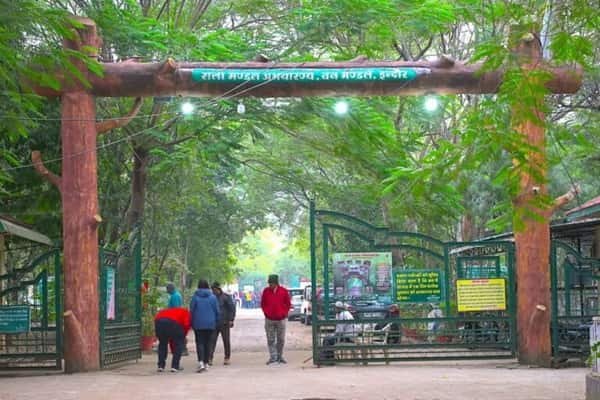
Tungareshwar Wildlife Sanctuary gives Mumbai-region travellers something that is increasingly difficult to find close to a major city: a long stretch of forested hills where the experience still feels more like a walk into the Western Ghats than a conventional tourist attraction. The sanctuary lies around Vasai and Virar in Palghar district, north of Mumbai, and protects about 85.7 sq km of dry deciduous, moist deciduous and semi-evergreen forest. It was notified as a wildlife sanctuary in 2003 and forms an important green connection in the wider landscape between Sanjay Gandhi National Park and the Tansa forest region.
For visitors, Tungareshwar is best known for three things that come together naturally rather than as separate attractions: forest walking, the climb towards Tungareshwar Mahadev Temple, and the dramatic change in the landscape during the monsoon. Streams begin to flow, seasonal waterfalls appear and the hill slopes turn intensely green. Birdwatchers also use the sanctuary as a quieter alternative to more formal wildlife parks around Mumbai. It is not a safari destination with predictable animal sightings, so the visit works best for travellers who enjoy trekking, trees, birds, insects, forest sounds and the simple pleasure of spending a few hours away from dense urban development.
Quick About Tungareshwar Wildlife Sanctuary
| Detail | Information |
| Location | Vasai-Virar region, Palghar district, Maharashtra |
| Protected Area | Wildlife Sanctuary |
| Approximate Area | 85.7 sq km |
| Year Notified | 2003 |
| Landscape | Forested hills, deciduous and semi-evergreen woodland, seasonal streams |
| Known For | Trekking, birdwatching, monsoon greenery and Tungareshwar Mahadev Temple |
| Nearest Major Railhead | Vasai Road |
| Nearest Major City | Mumbai |
| Best Overall Period | Monsoon for scenery; November to February for easier walking |
| Visit Style | Day visit, walking and trekking |
Tungareshwar Wildlife Sanctuary Timings
Maharashtra Eco Tourism currently carries an official page for Tungareshwar, but it does not publish a clear day-by-day visitor timetable. Current local visitor sources generally use a daytime window of around 6:00 AM to 6:00 PM. Because access can be regulated by forest staff, weather, temple crowds and daylight conditions, it is better to treat this as a practical planning window rather than a guaranteed gate schedule.
| Visit Type | Suggested / Common Window | Planning Note |
| General sanctuary visit | Around 6:00 AM to 6:00 PM | Finish forest walking well before dark |
| Best start for trekking | 6:30 AM to 8:30 AM | Cooler weather and quieter trails |
| Monsoon visit | Daylight hours only | Access may change after heavy rain |
Visitors should avoid starting a long trail late in the afternoon. Mobile connectivity can be uneven in forested stretches, and the terrain becomes more difficult to judge after sunset.
Tungareshwar Wildlife Sanctuary Ticket Price
A single current entry-fee figure is not clearly published on the Maharashtra Eco Tourism page, and recent visitor sources show conflicting amounts. For that reason, it is safer not to present an uncertain number as an official tariff.
| Charge | Current Practical Information |
| Sanctuary entry | Current official public rate is not clearly published online; confirm at the entrance |
| Parking / local vehicle charges | May be collected separately depending on where the vehicle is left |
| Guide / local assistance | Not a universal fixed charge; arrange locally if required |
Carry small-denomination cash as a backup. Forest fees and local transport arrangements can be revised without much advance publicity, especially around busy monsoon weekends and religious occasions.
What Makes Tungareshwar Wildlife Sanctuary Special
The strongest part of the Tungareshwar experience is the change of landscape over a relatively short distance. The approach from the Vasai side begins near busy settlements, yet the road and walking route quickly move into forested hills. Teak, kadamba, karanj, bamboo and many other native trees occur in the wider sanctuary landscape, while the famous karvi shrub is also associated with these hills. The sanctuary supports mammals such as leopard, wild boar, barking deer, hare, jackal and macaques, although most day visitors will see birds, butterflies, monkeys and forest signs more easily than large mammals.
Tungareshwar Mahadev Temple: The temple is an important pilgrimage point inside the forested landscape and is one reason the route can become busy on Mondays, during Shravan and on festival days.
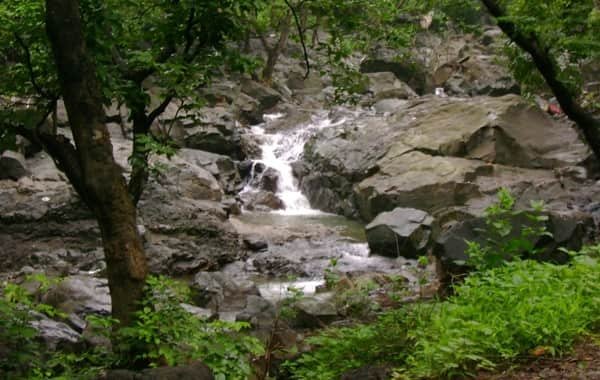
Seasonal streams and waterfalls: During and soon after the monsoon, water flows across parts of the hill route and creates the most photogenic version of Tungareshwar. These same conditions also make rocks slippery.
Birdwatching: The sanctuary supports forest and edge species including raptors, jungle fowl, parakeets, kingfishers, doves, owls and many smaller woodland birds. Quiet early-morning walking gives the best chance of useful sightings.
Forest trekking: The terrain is hilly rather than a flat garden walk. Visitors who continue beyond the temple zone should be prepared for uneven ground, heat, mud or rain depending on the season.
Wildlife and Forest Habitat
Tungareshwar is important not only as a recreational forest but also as part of the remaining wildlife habitat north of Mumbai. Government environmental documents describe the sanctuary as habitat for leopard, wild boar, four-horned antelope, black-naped hare, jungle cat, jackal, porcupine and macaques. The variety of dry and moist forest types creates different conditions from the lower slopes to the higher sections, which is one reason the area supports substantial plant and bird diversity.
Wildlife viewing here should be approached differently from a jeep safari. Large animals are shy and move according to their own patterns. Trying to chase sightings is both unrealistic and unsafe. A better visit is built around signs of the forest—bird calls, tracks, butterflies, tree forms, stream life and changes in vegetation—as well as the hill scenery.
How To Reach Tungareshwar Wildlife Sanctuary
By Train
Vasai Road is the most useful railway station for most visitors. It is well connected through Mumbai’s Western Railway suburban network. From Vasai Road East, travellers generally continue by auto-rickshaw, taxi or local road transport towards the Tungareshwar entrance area.
By Road
From Mumbai, the sanctuary is approached through the Western Express Highway / NH48 side towards Vasai. The final approach depends on the entry point and current local traffic. Driving can be convenient for groups, but parking location and the condition of the inner approach road should be checked locally, particularly in heavy rain.
By Air
Chhatrapati Shivaji Maharaj International Airport in Mumbai is the main airport for the region. The sanctuary is roughly a long suburban-road transfer from the airport, so a dedicated cab is more practical than trying to combine several forms of public transport with luggage.
Local Transport
Auto-rickshaws are commonly used from Vasai Road and nearby areas. Agree on the return arrangement if travelling on a quiet weekday, because finding a vehicle deep near the forest side can be less convenient than at the station.
Best Time to Visit Tungareshwar Wildlife Sanctuary
The Government of India tourism compendium identifies the monsoon as a highlight season for Tungareshwar, and visually it is difficult to disagree. From roughly July through September, the forest becomes exceptionally green, streams carry more water and the hills feel cooler. This is the most atmospheric season, but it is also the season that demands the most care. Wet rock, muddy slopes, sudden heavy showers and fast-flowing water can turn an easy-looking route into a difficult one.
For comfortable walking and birdwatching, November to February is often the better choice. Humidity is lower, the trail is easier to manage and an early start can produce pleasant temperatures. March to May is hotter and drier; visits are still possible, but midday trekking is tiring and water becomes more important.
How Much Time to Keep for the Visit
A short temple-and-forest outing can be done in around three hours if the route is straightforward and the visitor is not attempting a longer trek. A more relaxed half-day allows time for slow walking, photography and birdwatching. Visitors who want to explore extended trails should begin early and keep enough margin to return before evening.
Visitor Facilities and Practical Tips
Footwear matters: Use shoes with good grip. Casual smooth-soled footwear becomes risky on wet stone and mud.
Carry water: Do not depend on finding drinking water at every point of the forest route, especially on a weekday.
Protect electronics: During monsoon, keep phones and cameras in waterproof covers even when rain appears light.
Avoid peak crowd periods if birding: Religious and monsoon-weekend crowds can reduce the quietness that birdwatchers need.
Keep food secure: Macaques may be present around visited areas. Do not display or feed food to wild animals.
Check weather before leaving: Very heavy rain can change stream depth and trail conditions within a few hours.
Important Rules for Visitors
Treat the sanctuary as a protected forest rather than a picnic ground. Do not litter, play loud music, feed animals, remove plants, disturb nests or enter closed tracks. Alcohol, fire and behaviour that can start a forest fire should be avoided completely. Follow instructions from forest staff even when a route appears open, because closures may be related to wildlife movement, rain damage or safety conditions that are not obvious to visitors.
Swimming or standing in fast monsoon streams is not a sensible part of the visit. Water depth and current can change suddenly, while submerged rocks are often slippery. Keep children close on wet sections and do not attempt shortcuts through forest vegetation.
FAQs About Tungareshwar Wildlife Sanctuary
Q. Is Tungareshwar Wildlife Sanctuary suitable for children?
Older children who are comfortable with walking can enjoy the forest, streams and temple route. For very young children, the uneven terrain and monsoon slipperiness can make a long trek tiring. Families should choose a shorter route and turn back before children are exhausted.
Q. Do visitors normally see leopards at Tungareshwar?
No. Leopards occur in the wider sanctuary landscape, but they are secretive and sightings by ordinary daytime visitors are uncommon. The sanctuary should not be visited with the expectation of a large-mammal sighting.
Q. Is a guide compulsory for a normal visit?
A guide is not usually treated as compulsory for the commonly used temple-side route, but local or forest guidance is useful for lesser-known trails. Never enter an unfamiliar interior route simply because it appears on an online map.
Q. Can the sanctuary be visited during very heavy monsoon rain?
It is better to avoid the forest during extreme rainfall warnings. Streams can rise, loose soil can become unstable and road access may deteriorate. A light-rain monsoon visit is very different from entering during a severe weather spell.
Q. Is Tungareshwar a good place for serious bird photography?
Yes, particularly for photographers who enjoy forest birds rather than guaranteed close sightings. A moderate telephoto lens, early start and patient walking are more useful than moving quickly through the trail.
Q. Are food stalls available throughout the sanctuary?
Do not assume continuous food availability inside the forest. Some vendors may operate around busier approach or temple areas, but carrying your own water and a small amount of food is more reliable. Take all waste back out.