Dr Salim Ali Bird Sanctuary on Chorao Island shows a very different side of Goa from beaches and nightlife. The protected area occupies only about 1.8 sq km, yet it preserves a dense estuarine mangrove system on the western edge of the island beside the Mandovi River. Narrow tidal creeks pass through the mangroves, mudflats appear and disappear with the tide, and birds use the canopy, water channels and exposed banks at different times of the day. The sanctuary is named after India’s celebrated ornithologist Dr Salim Ali and is Goa’s only officially designated bird sanctuary.
The small size makes it easy to underestimate, but a good visit can be surprisingly rich. Egrets, herons, kingfishers, cormorants, sandpipers, curlews, drongos and winter visitors use the area, while mudskippers, crabs and other estuarine life are visible at low tide. The visitor experience can include a walk through the mangroves, watchtower observation and a boat or canoe trip through the channels. Timing matters more here than at many terrestrial sanctuaries because both bird activity and boat access are influenced by the tide.
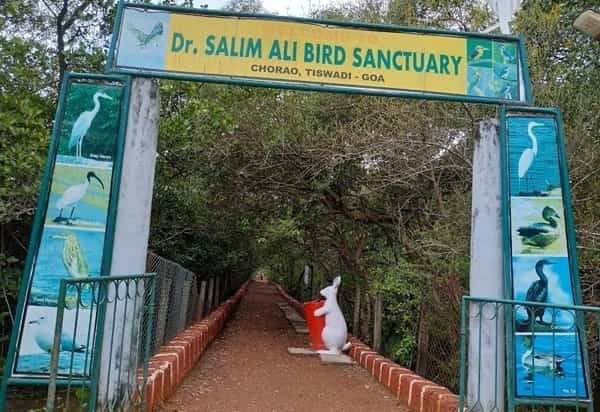
Quick About Dr Salim Ali Bird Sanctuary
| Detail | Information |
| Location | Chorao Island on the Mandovi River, Goa |
| Protected Area | Bird Sanctuary / estuarine mangrove habitat |
| Area | About 1.8 sq km |
| Known For | Mangroves, resident and migratory birds, tidal-creek boat rides |
| Nearest City | Panaji |
| Main Approach | Ribandar ferry to Chorao Island |
| Opening Season | Throughout the year |
| Best Birding Period | October to March |
| Best Time of Day | Early morning |
| Visit Style | Walking, watchtower and tide-dependent boating |
Dr Salim Ali Bird Sanctuary Timings
Incredible India’s current destination listing gives the sanctuary opening time as 6:00 AM and closing time as 6:00 PM. The Government of Goa also describes it as open throughout the year. Boat movement through some channels depends on the tide, so the best boating time may not exactly match the best walking time.
| Day / Activity | Opening Time | Closing / Condition |
| Sanctuary visit | 6:00 AM | 6:00 PM |
| Early birdwatching | 6:00 AM onward | Best before the area gets warmer |
| Boat / canoe exploration | Tide-dependent | Confirm locally on the day |
A high tide allows powered boats to use more of the creek network, while small canoes can access some channels at lower water. Serious birders should consider both sunrise and tide timing when planning the visit.
Dr Salim Ali Bird Sanctuary Ticket Price
Goa Forest Department’s published visitor-fee schedule lists separate entry, boat and camera charges. These are useful official reference figures, but visitors should still confirm at the sanctuary counter because tariffs can be revised.
| Visitor / Service | Published Charge |
| Adult entry | ₹20 |
| Child entry | ₹10 |
| Department boat visit | ₹75 per person per hour |
| Private tourist boat permission | ₹200 per boat per day, where applicable under the tariff |
| Still camera | ₹30 |
| Video / handycam | ₹150 |
| Professional filming | Separate higher permission charge |
Private canoe or boat operators may quote their own service price in addition to government entry charges. Agree on the duration and total amount before starting a private ride.
What to See at Dr Salim Ali Bird Sanctuary
This is a mangrove sanctuary, so the experience changes continuously with light and water level. At low tide, exposed mud can attract waders and reveal mudskippers and crabs. As water rises, birds shift into branches and sheltered creek edges.
Mangrove boardwalk / walking route: Walking quietly allows visitors to look into the lower mangrove canopy for kingfishers, herons, sunbirds and smaller species.
Watchtower: The elevated viewpoint helps birders scan above the canopy and across open channels, useful for raptors, cormorants and wider landscape photography.
Boat or canoe ride: A slow ride through the creeks gives a different perspective on mangrove roots, mud banks and waterbirds. Tide level influences which channels can be entered.
Winter visitors: The cooler months can bring additional waterbirds including coots and pintails, adding to the resident coastal species.
Estuarine wildlife: Flying foxes, jackals and crocodiles are associated with the sanctuary landscape, although birdlife and mangrove ecology remain the main focus for most visitors.
Why the Mangrove Habitat Matters
Mangroves are not simply a backdrop for bird photographs. Their tangled roots trap sediment, reduce shoreline erosion and provide nursery habitat for fish, crabs and many other organisms. These smaller forms of life support birds and make the sanctuary biologically productive despite its limited area.
The site also demonstrates how a small protected patch can matter in a heavily used coastal landscape. Chorao sits close to Panaji and busy river routes, yet the sanctuary preserves a functioning estuarine ecosystem within sight of human activity.
How To Reach Dr Salim Ali Bird Sanctuary
From Panaji
Travel to the Ribandar ferry wharf by bus, taxi or two-wheeler. Take the ferry across the Mandovi to Chorao Island. The sanctuary entrance is within walking distance after arriving on the island.
By Road and Ferry
Vehicles can travel to the Ribandar side, but the final approach involves the river crossing. Ferry schedules are frequent in normal conditions, although waiting time can increase at busy periods.
By Train
Madgaon Junction is a major railway station for Goa, but travellers staying in North Goa may also use other convenient stations depending on their route. From the station, continue by road to Panaji/Ribandar.
By Air
Both Dabolim Airport and Manohar International Airport serve Goa. The more convenient airport depends on where you are staying; from either, use road transport to Ribandar before the ferry crossing.
Best Time to Visit Dr Salim Ali Bird Sanctuary
October to March is the strongest overall season. Cooler mornings are comfortable for walking and winter migration increases bird diversity. Early morning is preferable throughout the year because birds are active and the light is softer for photography.
The monsoon has ecological appeal because the mangroves look lush, but heavy rain can reduce visibility and change boat conditions. Summer visits are possible, yet heat and humidity build quickly after mid-morning. Tide charts are especially useful for visitors who want a boat-based experience.
How Much Time to Keep for the Visit
Keep two to three hours for a first visit if you want to combine walking, watchtower observation and a boat ride. A keen birder can spend longer by moving slowly and waiting for activity. Visitors who only walk the entrance trail may finish much faster, but they will miss the creek perspective.
Visitor Facilities and Practical Tips
Carry binoculars: Birds are often seen across water or high in the mangroves, where binoculars are much more useful than phone zoom.
Check the tide: A suitable tide can make the boat experience far better and improve access to the creeks.
Use insect repellent: Mangrove environments can have mosquitoes, especially around still water and shaded sections.
Wear non-slip footwear: Paths can be damp and muddy after rain.
Carry drinking water: Take a reusable bottle and avoid leaving plastic behind.
Keep your voice low: The sanctuary is small, so loud groups can disturb birds over a surprisingly large area.
Important Rules for Visitors
Do not feed birds, throw food into the creeks, pick mangrove plants or disturb nests. Boat operators should move slowly in sensitive channels, and visitors should avoid demanding that a boat approach roosting birds too closely.
Keep all waste with you until it can be disposed of properly. Mangrove litter is particularly harmful because plastic becomes trapped in roots and tidal channels. Photography should remain observation-based, without playback calls or deliberate flushing of birds.
FAQs About Dr Salim Ali Bird Sanctuary
Q. Is this Dr Salim Ali Bird Sanctuary the same as Thattekkad in Kerala?
No. Thattekkad Bird Sanctuary in Kerala is also associated with Dr Salim Ali’s name, but this article refers to the separate official Dr Salim Ali Bird Sanctuary on Chorao Island in Goa.
Q. Is the ferry to Chorao difficult for first-time visitors?
No. The Ribandar-Chorao ferry is a routine local crossing. The main planning issue is reaching the correct ferry point and allowing a little waiting time during busy periods.
Q. Do I need a boat ride to enjoy the sanctuary?
No. Walking and the watchtower can still produce good bird sightings. A boat adds access to tidal creeks and is especially valuable for understanding the mangrove ecosystem.
Q. Can children enjoy the sanctuary?
Yes, particularly children who are interested in birds, boats or nature. Keep them close near water, ask them to remain quiet around birding points and carry insect protection.
Q. Are crocodiles commonly seen on every boat ride?
No. Crocodiles occur in the wider estuarine habitat, but sightings are not guaranteed. Visitors should never ask a boatman to approach one closely if a crocodile is spotted.
Q. What camera lens is useful here?
A telephoto lens in roughly the 200-500 mm range is useful for birds, while a wider lens can capture mangrove channels and river scenery. A waterproof cover is sensible in humid or rainy weather.