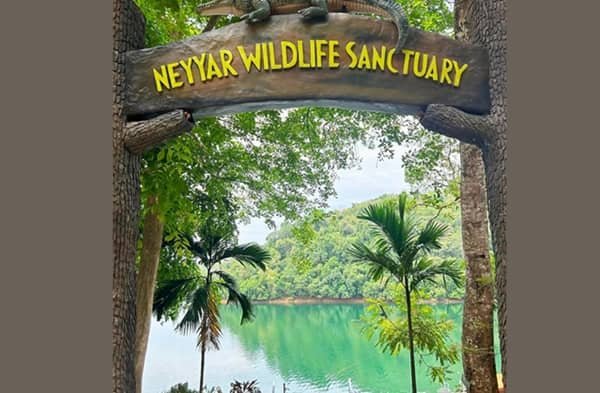
Neyyar Wildlife Sanctuary lies in the southern Western Ghats near Thiruvananthapuram, where forested hills descend towards the broad Neyyar Reservoir. Established in 1958, the sanctuary covers about 128 sq km and protects a varied landscape of evergreen and moist deciduous forest, hill habitat, reed patches and water. The reservoir is the most visible part of the visitor experience, but the protected area extends far beyond the dam-side tourism zone into much wilder terrain towards the Agasthyamalai landscape.
For most day visitors, Neyyar is experienced through the dam-side eco-tourism facilities, boating, rehabilitation centres and guided forest programmes rather than by freely entering the interior sanctuary. Kerala Tourism continues to list boating and package-based visitor activities, while the wider sanctuary supports elephants, gaur, sambar, sloth bear, leopard, Nilgiri langur, reptiles, butterflies and a rich bird community. One important point for modern visitors is that older tourism descriptions often promote a ‘Lion Safari Park’. The park historically held lions, but official zoo records show that the last lion died in 2021, so travellers should confirm the present programme rather than expecting a lion sighting simply from older brochures.
Quick About Neyyar Wildlife Sanctuary
| Detail | Information |
| Location | Neyyar Dam area, Thiruvananthapuram district, Kerala |
| Protected Area | Wildlife Sanctuary |
| Area | About 128 sq km |
| Established | 1958 |
| Landscape | Western Ghats forest, reservoir, hills and river valleys |
| Known For | Neyyar Reservoir, boating, forest programmes and rehabilitation centres |
| Nearest Major City | Thiruvananthapuram |
| Nearest Railway Station | Thiruvananthapuram Central |
| Nearest Airport | Thiruvananthapuram International Airport |
| Best Period | September to February |
Neyyar Wildlife Sanctuary Timings
Current visitor listings for the sanctuary complex generally use a 9:00 AM to 4:00 PM day, with Monday as the weekly holiday. Kerala Tourism’s ecotourism package page lists some activities up to 5:00 PM, so the exact last departure depends on the programme rather than only the gate time.
| Visitor Area / Activity | Timing | Important Note |
| General sanctuary visitor complex | 9:00 AM to 4:00 PM | Monday closed |
| Published eco-tourism package window | 9:00 AM to 5:00 PM | Individual departure times vary |
| Trekking / special programme | Programme-specific | Advance confirmation needed |
Arrive in the morning if boating or multiple visitor-centre activities are important. Late arrival can mean missing the last scheduled departure even when the main complex is still open.
Neyyar Wildlife Sanctuary Ticket Price
Kerala Tourism publishes package charges rather than one universal sanctuary ticket for every experience. The rates below are useful references for the listed visitor programmes. Because programme content has changed over time, confirm what is actually included before paying.
| Published Programme / Visitor | Reference Charge |
| Combined published package – Indian adult | ₹395 |
| Combined published package – Indian child | ₹200 |
| Combined published package – foreign adult | ₹555 |
| Combined published package – foreign child | ₹315 |
| Differently abled visitor – published package | ₹160 |
| Bus safari – Indian adult | ₹160 |
| Bus safari – Indian child | ₹80 |
| Bus safari – foreign adult | ₹315 |
| Bus safari – foreign child | ₹200 |
Kerala Tourism’s older/current package description still refers to a Lion Safari Park component. Since official zoo records state that the park has had no resident lion since 2021, confirm the actual route and attractions operating on your visit date.
What to See and Do at Neyyar Wildlife Sanctuary
Neyyar is easiest to understand as two experiences: the accessible reservoir-side visitor zone and the much larger protected forest beyond it. Day visitors usually spend most of their time around the dam, water and organised facilities.
Neyyar Reservoir boating: The large reservoir is the visual centre of a day visit. Boat rides provide views of forested slopes and can offer distant wildlife or bird sightings along the shoreline.
Crocodile rehabilitation centre: The sanctuary has a long-established crocodile conservation facility, which remains one of the most educational components for families.
Deer rehabilitation area: The deer facility forms part of the organised visitor circuit and can be easier for children to appreciate than waiting for a chance sighting in dense forest.
Forest trekking: Kerala Tourism lists guided trekking options including routes towards Kombaikani and Meenmutty. These are separate from casual dam sightseeing and should be planned in advance.
Agasthyamalai landscape: The sanctuary forms part of a larger biodiversity-rich mountain region. Longer and seasonal treks associated with Agasthyakoodam require separate permissions and should not be confused with an ordinary Neyyar Dam visit.
Wildlife and Habitat
Neyyar supports more than the animals visible near the visitor complex. The sanctuary’s forests provide habitat for elephant, gaur, sambar, barking deer, wild boar, sloth bear, leopard, Nilgiri langur and many reptiles and amphibians. Birdlife includes kingfishers, jungle fowl, mynas, egrets, cormorants and raptors.
Because the forest is dense, animal sightings on a casual visit can be limited. A reservoir boat or guided trek may improve the chance of seeing wildlife signs, but visitors should appreciate the ecosystem rather than measure success by whether a large mammal appears.
How To Reach Neyyar Wildlife Sanctuary
By Road
Neyyar Dam is roughly 30 km from central Thiruvananthapuram. Taxis, private cars and buses via the Kattakada side are commonly used. A cab is the most convenient option for families or travellers carrying trekking gear.
By Train
Thiruvananthapuram Central is the main railhead, around 30 km from the sanctuary region on Kerala Tourism information. Continue by road from the station.
By Air
Thiruvananthapuram International Airport is roughly 38 km away. A direct taxi is the simplest transfer, especially when arriving with luggage.
For Trekking Programmes
The reporting point for a special trek may differ from the casual dam sightseeing area. Confirm the meeting location and start time before leaving Thiruvananthapuram.
Best Time to Visit Neyyar Wildlife Sanctuary
Kerala Tourism recommends September to February for the sanctuary. The months after the monsoon are green, while winter mornings are comfortable for boating and walking. This period also suits birdwatching and longer outdoor programmes.
March to May becomes hotter and more humid, so early arrival is important. The monsoon creates spectacular reservoir and forest scenery but can disrupt trekking, make paths slippery and alter boating conditions. Special mountain routes may have their own seasonal permit windows.
How Much Time to Keep for the Visit
Keep at least four hours for a relaxed dam-side visit that includes one organised activity. A full day is better if combining boating, rehabilitation centres and a longer forest experience. A dedicated trek should be treated as the main activity for that day rather than added to several tourist stops.
Visitor Facilities and Practical Tips
Confirm the day’s programme: Do not travel specifically for the historic lion safari without checking what currently operates.
Arrive early: Morning gives the widest choice of boat and activity slots.
Carry sun and rain protection: The reservoir is exposed while forest sections can be humid and wet.
Use insect repellent: Mosquitoes can be noticeable near water and shaded vegetation.
Bring drinking water: Carry enough for the day, especially when adding a trek.
Keep a flexible wildlife expectation: Dense Western Ghats forest does not produce guaranteed close animal sightings.
Important Rules for Visitors
Do not enter the forest without permission, leave guided routes, feed rehabilitation-centre animals or approach the reservoir edge in unsafe places. Swimming should never be attempted merely because the water looks calm; crocodiles occur in the wider system and reservoir banks can be unstable.
Follow boat safety instructions and wear life jackets where provided. Loud music, littering, smoking, alcohol and disturbance of wildlife are inappropriate in the sanctuary.
FAQs About Neyyar Wildlife Sanctuary
Q. Are there still lions at Neyyar Lion Safari Park?
Official zoo records state that the last resident lion died in June 2021. Some tourism pages still carry the older package name, so visitors should confirm what the current bus or safari programme actually includes before booking.
Q. Can Neyyar be visited without taking a boat ride?
Yes. The dam-side area and visitor facilities can still be explored, but boating is one of the best ways to appreciate the scale of the reservoir and surrounding forest.
Q. Is the sanctuary suitable for small children?
The dam-side visitor circuit can work well for families. Long forest treks are a different activity and should be chosen according to a child’s walking ability, weather and the guidance of forest staff.
Q. Can visitors go to Agasthyarkoodam from the normal Neyyar ticket area?
No. Agasthyarkoodam trekking is a separate, seasonal, permission-controlled activity. It should not be treated as an extension of a normal Neyyar Dam sightseeing ticket.
Q. Are crocodiles seen freely around the reservoir?
Crocodiles are part of the wider ecosystem, but casual sightings are not guaranteed. The presence of crocodiles is also one reason visitors should never swim or enter the water without explicit permission.
Q. Is Neyyar a good half-day trip from Thiruvananthapuram?
Yes. A half-day is practical for the dam-side visitor zone if you start early. For trekking or multiple activities, a full day is more comfortable.