Kumarakom Bird Sanctuary is a small protected green world set against the vast backwater landscape of Vembanad Lake. Spread over about 14 acres in Kottayam district, it is not a large wilderness reserve; its appeal comes from the closeness of water, trees, canals and bird habitat within an easy walking circuit. The sanctuary began on land associated with the old Baker estate and is now managed by the Kerala Tourism Development Corporation. A shaded path leads through dense vegetation towards observation points and a watchtower, while the lake edge opens the possibility of seeing herons, egrets, darters, cormorants, kingfishers, waterfowl and seasonal migrants. Kumarakom is unusual because there are two strong birding periods: the monsoon and early post-monsoon months are important for resident wetland birds and nesting activity, while November to February brings migratory interest. Visitors can explore on foot and can also arrange boat experiences around the Vembanad side, though boating is a separate activity rather than part of the basic entry ticket. The sanctuary is easy to combine with a Kumarakom backwater stay, yet it works best when treated as an early-morning nature visit rather than a quick sightseeing stop in the middle of the day.
Quick About Kumarakom Bird Sanctuary
| Detail | Information |
| Location | Kumarakom, Kottayam district, Kerala |
| Setting | Banks of Vembanad Lake and backwater channels |
| Approximate Area | 14 acres |
| Managed By | Kerala Tourism Development Corporation (KTDC) |
| Known For | Resident wetland birds, migratory birds, nature walk and watchtower |
| Main Experience | Walking trail, birdwatching and optional backwater boating |
| Best Local Birding | June to August |
| Best Migratory Birding | November to February |
| Nearest Railway Station | Kottayam Railway Station |
Kumarakom Bird Sanctuary Timings
Kerala Tourism’s current destination information lists the sanctuary as an all-day visitor attraction from early morning to evening. The first part of the morning is the strongest time for bird activity and is also far more comfortable than walking after the day becomes warm and humid.
| Day | Opening Time | Closing Time |
| Monday to Sunday | 6:00 AM | 6:00 PM |
Some travel material and project documents show slightly shorter operational windows, especially for counters and specific facilities. For birdwatching, there is little advantage in arriving late in the day; aim for the early morning and confirm locally if you plan a visit close to the final entry time.
Kumarakom Bird Sanctuary Ticket Price
KTDC’s current 2026-27 Water Scapes tariff lists the bird-sanctuary admission charge including GST. This is the most useful current official tariff for visitors planning a standard walk through the sanctuary.
| Visitor Category | Ticket Price |
| Adult | ₹150 including GST |
| Child up to 12 years | ₹75 including GST |
Boat rides, private guided tours and photography services are separate arrangements and are not included in the basic entry fee. KTDC also publishes separate boating charges for its resort activities, so visitors should confirm exactly what a boat operator’s price covers before boarding.
What to See at Kumarakom Bird Sanctuary
The sanctuary is best experienced slowly. The vegetation can be dense, so birds are often heard before they are seen, and visitors who stop quietly near openings generally notice more than those who simply walk to the end and back.
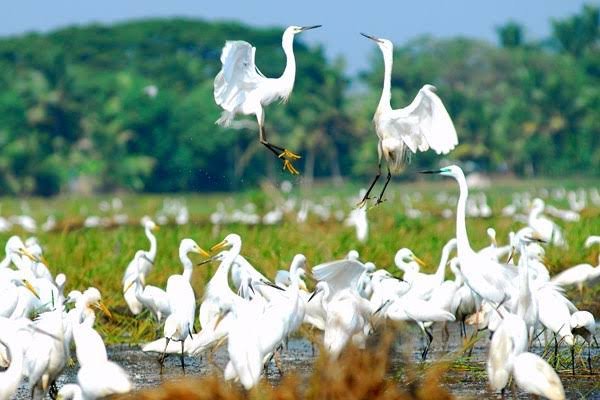
Wetland and waterbirds: Egrets, herons, darters, cormorants, kingfishers and waterfowl use the lake edge, channels and surrounding wetlands.
Seasonal migrants: The broader Vembanad system attracts migratory birds in winter, adding ducks, waders and other visitors to the resident bird community.
Nature trail: A shaded walking route passes through mature trees and waterside vegetation, offering a close look at the sanctuary’s small but layered habitat.
Watchtower: The observation tower gives a higher view over the canopy and backwater side, useful when birds are difficult to see from the lower path.
Boat-based birding: A canoe or motorboat on the Vembanad side can reveal birds that are hidden from the land trail, but boating should be arranged separately and responsibly.
How To Reach Kumarakom Bird Sanctuary
By Road
Kumarakom is well connected with Kottayam and other central Kerala destinations. The sanctuary is close to the main Kumarakom tourism area, so taxis, local buses and auto-rickshaws can reach it easily from hotels and backwater resorts.
By Train
Kottayam Railway Station is the main railhead. Kerala Tourism places it roughly 13-15 km away in its visitor information, while current district route information can show a slightly longer road distance depending on the exact route. A taxi or auto-rickshaw is the simplest onward connection.
By Air
Cochin International Airport is the nearest major airport. Published tourism distances vary by road route, generally around 75-95 km. Allow several hours for the road journey during busy traffic or monsoon weather.
By Boat and Backwater Transfer
Some resorts and local operators can arrange water-based transfers or birding rides around Kumarakom. These are scenic but should not be confused with the sanctuary entry ticket, and the exact boarding point may be outside the walking entrance.
Best Time to Visit Kumarakom Bird Sanctuary
Kumarakom does not have only one useful season. June to August is recognised by Kerala Tourism as an important period for resident and locally breeding wetland birds, when the landscape is lush and water levels are high. Rain is common, so visitors should carry protection for both themselves and camera equipment.
November to February is better for travellers specifically hoping to see migratory birds and to enjoy cooler walking weather. Whatever the month, reach close to 6:00 AM if birdwatching is the priority. By late morning, heat, humidity and visitor movement increase while many birds become less active.
Visitor Facilities and Practical Tips
Carry binoculars; dense foliage makes them far more useful than relying on a phone camera.
Wear closed shoes with good grip because shaded and wet stretches can remain slippery after rain.
Use insect repellent, especially in humid months and near still water.
Keep camera equipment protected from sudden showers during the monsoon season.
Allow at least 90 minutes for an unhurried walk, and longer if you plan to stop repeatedly for birdwatching.
If you add a boat ride, agree on the route, duration and total charge before departure.
Important Rules for Visitors
Keep voices low and do not use recorded bird calls repeatedly to attract birds.
Never feed birds or throw food into the water channels.
Stay on the designated walking path and avoid entering nesting or marshy areas.
Take all plastic bottles, wrappers and other waste out with you or use designated bins.
Do not damage vegetation or collect feathers, nests, plants or other natural material.
Follow local instructions for boating and keep a respectful distance from roosting or nesting birds.
FAQs About Kumarakom Bird Sanctuary
Q. Is boating included in the Kumarakom Bird Sanctuary entry ticket?
No. The basic ticket covers sanctuary entry. Boat rides on Vembanad Lake or nearby canals are separate services and their prices depend on the operator, boat type and duration.
Q. Is the watchtower suitable for every visitor?
Reaching the tower requires walking through the sanctuary and then climbing steps. Visitors with knee problems, vertigo or limited mobility can still enjoy the lower trail, but should not depend on the tower as the only worthwhile viewpoint.
Q. Can a stroller or wheelchair be used throughout the sanctuary?
The route is a nature trail rather than a fully level indoor walkway. Conditions can be damp and uneven, so access may be difficult for standard wheelchairs or strollers. Check current path conditions at the entrance if mobility is a concern.
Q. Do visitors need a professional guide to see birds?
A guide is not essential for a casual walk, but it can make a large difference for first-time birdwatchers because many species are identified by call or movement in dense foliage before they are clearly seen.
Q. Are mosquitoes and leeches a concern?
Mosquitoes can be noticeable in the humid wetland environment, so repellent is useful. Leeches may appear on very wet ground during the monsoon, especially away from drier paved sections; closed footwear helps.
Q. Is Kumarakom Bird Sanctuary worthwhile for children who are not serious birdwatchers?
Yes, if the visit is kept short and interactive. The shaded trail, water channels, watchtower and common birds can hold a child’s interest, but early morning is better than a long hot midday walk.