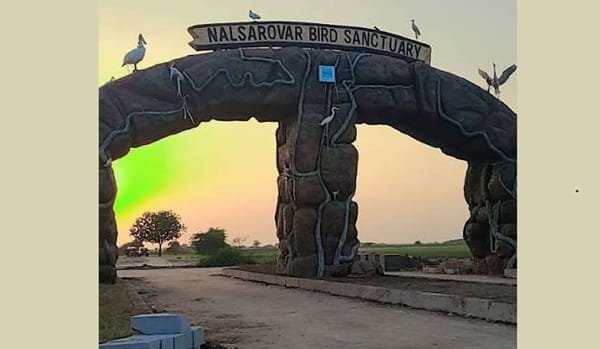
Nal Sarovar Bird Sanctuary is one of Gujarat’s most important wetland destinations and a classic early-morning excursion from Ahmedabad. The sanctuary protects a vast, shallow lake system dotted with numerous small islands and seasonal mudflats. In winter, the open water and marshy edges attract large numbers of migratory birds, including flamingos, pelicans, ducks, geese, cranes, waders and other waterbirds. The landscape is very different from a forest sanctuary: the experience is about open horizons, quiet water, changing light and slow boat movement through bird-rich wetland habitat.
The sanctuary covers about 120.82 sq km and was declared a bird sanctuary in 1969. Its international importance was recognised when Nalsarovar became a Ramsar wetland. For visitors, the most memorable activity is usually a country-boat ride arranged from the official visitor area. The quality of a visit depends heavily on timing. Arriving around sunrise can mean calmer conditions, softer light and better bird activity, while late arrival may bring heat, crowds and fewer close views. Families can enjoy the trip, but serious birdwatchers should plan for an early start, binoculars and enough time on the water.
Quick About Nal Sarovar Bird Sanctuary
| Detail | Information |
| Location | About 60-65 km southwest of Ahmedabad, Gujarat |
| Area | About 120.82 sq km |
| Declared sanctuary | 1969 |
| Ramsar status | Wetland of International Importance since 2012 |
| Known for | Winter migratory waterbirds, flamingos, pelicans, cranes and country-boat birdwatching |
| Main experience | Boat ride across the shallow wetland and islets |
| Best season | November to February |
| Best time of day | Sunrise to early morning |
| Ideal visit duration | 3 to 5 hours including ticketing and boating |
Timings
Nalsarovar is best treated as an early-morning destination. Commonly published visitor hours are from around 6:00 AM to 5:30 PM, but birdwatchers should not wait until late morning simply because the sanctuary remains open through the day.
| Activity / Day | Timing | Notes |
| Sanctuary visitor hours | About 6:00 AM to 5:30 PM | Subject to seasonal and local changes |
| Best birdwatching window | 6:00 AM to about 9:30 AM | Cooler, quieter and generally better for waterbirds |
| Boat rides | Operate during visitor hours, subject to weather and local conditions | Reach early during weekends and winter holidays |
Fog, wind, water level and local operational decisions can affect boating. Very late-afternoon visitors should check whether boats are still being sent out before buying other tickets.
Ticket Price
Nalsarovar pricing includes several small visitor components, and boating is charged separately. Current local visitor information commonly shows a total around ₹75 on weekdays and ₹85 on weekends for an Indian visitor, while the standard boat rate is often listed at ₹220 per person or ₹1,320 for a six-person boat. Treat these as planning figures because the state can revise individual fee components.
| Category / Activity | Price / Charge |
| Indian visitor – weekday total | Around ₹75 including commonly charged entry/visitor components |
| Indian visitor – weekend total | Around ₹85 including commonly charged entry/visitor components |
| Standard boat ride | Around ₹220 per person |
| Full standard boat for up to six people | Around ₹1,320 |
| Camera / special equipment | Separate charge may apply |
Visitor charges, activity availability and local operating rules can be revised. Check the current amount at the official counter or authorised booking channel before making a long journey.
Why Nal Sarovar Is Important
Nalsarovar is one of the largest wetland bird sanctuaries in Gujarat. Its shallow water, reed beds, exposed mud, small islands and surrounding grassland create feeding and resting habitat for many species at the same time. The wetland lies on important migratory routes, so winter can bring birds that have travelled from distant parts of Asia and beyond.
The water level changes seasonally. When the lake is fuller, many islands are partly submerged; as levels fall, mudflats and shallow feeding zones become more visible. These changes influence where birds gather and how boatmen approach the birding areas. A visit in one winter can therefore look quite different from another.
What to See and Experience
Flamingos are the most famous birds associated with Nalsarovar, but visitors should not make them the only goal. Pelicans, cormorants, herons, egrets, spoonbills, cranes, ducks, geese, terns, gulls, sandpipers and stilts may all be part of the winter scene. Raptors can sometimes be seen over the surrounding open country.
The boat ride is the central experience. Traditional boats move slowly through the shallow wetland, allowing better observation than a quick shoreline visit. For serious birdwatching, ask for a straightforward birding route and avoid unnecessary pressure to extend the ride unless you understand the additional cost and route. Keep binoculars protected from spray and carry a light jacket on cold winter mornings.
How To Reach Nal Sarovar Bird Sanctuary
By road: Nalsarovar is roughly 60-65 km from Ahmedabad and is easiest to reach by private car or taxi. An early departure from the city is strongly recommended. The final approach passes through smaller roads and villages, so allow extra time rather than relying only on the straight-line distance.
By train: Viramgam is one of the closer railway stations, but most outstation travellers find Ahmedabad more practical because of its wider train network and easier taxi options. From either railhead, the final journey is by road.
By air: Sardar Vallabhbhai Patel International Airport in Ahmedabad is the nearest major airport. Travellers arriving by air should usually stay in Ahmedabad and make Nalsarovar an early-morning day trip rather than trying to connect directly after a late flight.
Best Time to Visit Nal Sarovar Bird Sanctuary
November to February is the strongest season for most visitors because migratory waterbirds are present in large numbers and temperatures are comfortable. December and January can be particularly rewarding, though weekends and public holidays can also be crowded.
The best hour is around sunrise. Birds are active, the lake surface is calmer and the light is excellent for photography. By late morning, glare and heat increase. The monsoon fills the wetland but is not the classic birdwatching season, while very hot months can make a long open-water boat ride uncomfortable.
Visitor Facilities and Practical Tips
The visitor zone includes ticketing and an interpretation component, and local transport may be used between parking and the lake access area. Basic food and refreshments can be available around the tourist zone, but serious birdwatchers often prefer to carry water and a light snack so they can start immediately at dawn.
Agree on the official boat route and charge before departure. Keep your ticket until the ride is over. Bring a hat, sunglasses and sunscreen for later in the morning, and use a neck strap for cameras or binoculars. A zoom lens helps, but getting very close to birds should never be demanded from the boatman because repeated disturbance can push feeding flocks away.
Important Rules for Visitors
Do not feed birds, throw plastic into the wetland or ask boat operators to chase flocks for photographs. Keep music and loud conversation off the lake. Avoid standing suddenly in a narrow boat unless the boatman says it is safe. Respect nesting or resting areas and follow any seasonal restrictions placed by forest staff.
FAQs
Q. Is it necessary to take a boat at Nalsarovar?
A shoreline visit is possible, but the boat ride is the best way to experience the scale of the wetland and reach birding areas away from the busy entry zone.
Q. Is the boat ride safe for children?
Families commonly use the boats, but children should remain seated and follow the boat operator. Ask for available safety equipment and avoid overcrowding.
Q. Should I negotiate boat prices?
Use the rate displayed or issued through the authorised system at the visitor area. Be cautious about unofficial add-on routes or cash demands that are not clearly explained before departure.
Q. Can I see flamingos on every winter visit?
Not necessarily. Flamingo numbers and locations change with water depth, food availability and migration patterns. Nalsarovar remains worthwhile for many other waterbirds even when flamingos are distant.
Q. Is Nalsarovar suitable for elderly visitors?
It can be, provided the visitor is comfortable getting into and out of a small country boat. Ask for assistance at the jetty and avoid a long ride if balance or back problems are a concern.
Q. What should photographers carry?
A moderate telephoto lens, lens cloth, spare battery and a waterproof cover or bag are useful. Early light is excellent, but protect equipment from spray and avoid changing lenses repeatedly in a moving boat.