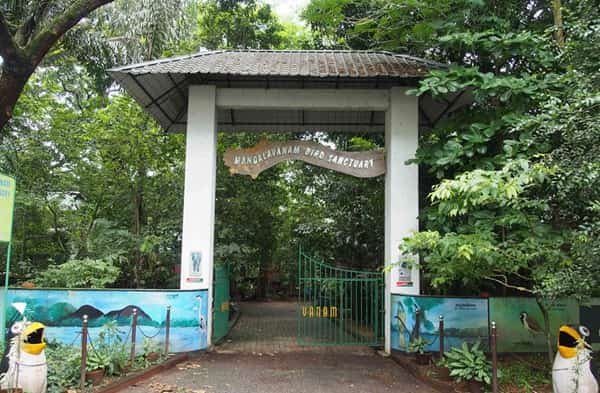
Mangalavanam Bird Sanctuary is a small but ecologically important green pocket in the middle of Kochi. Surrounded by busy roads, offices and dense urban development, the sanctuary protects a shallow tidal wetland, mangrove vegetation and mature trees close to the Kerala High Court and Marine Drive area. Its setting is what makes it unusual: within minutes, visitors can move from the noise of central Ernakulam into a shaded habitat used by resident birds, seasonal visitors, butterflies, bats and other small wildlife.
The sanctuary covers only about 2.74 hectares, so it should not be compared with large bird reserves such as Ranganathittu or Nalsarovar. Mangalavanam works best as a short nature stop, an urban biodiversity lesson and a quiet walking experience. Bird sightings vary with season, water conditions and time of day, and the dense foliage can sometimes be more impressive than the number of birds visible at once. For travellers staying in central Kochi, however, the location is extremely convenient. A visit can easily be combined with Marine Drive, Fort Kochi or other city attractions without requiring a full-day excursion.
Quick About Mangalavanam Bird Sanctuary
| Detail | Information |
| Location | Near Kerala High Court / Marine Drive area, Ernakulam, Kochi |
| Area | About 2.74 hectares |
| Protected as bird sanctuary | 2004 |
| Habitat | Mangroves, tidal pond, mature trees and urban wetland vegetation |
| Known for | Urban bird habitat, mangroves, flying foxes and nature study |
| Ideal duration | 45 minutes to 1.5 hours |
| Best season | January to March for pleasant weather and bird activity |
| Good for | Families, students, casual birdwatchers and short city nature visits |
Timings
Current visitor listings most consistently show daytime access around 10:00 AM to 5:00 PM. Older sources sometimes mention a wider 9:00 AM to 6:00 PM window, so travellers making a special trip should treat the narrower schedule as the safer planning choice.
| Activity / Day | Timing | Notes |
| Daily visitor timing | 10:00 AM to 5:00 PM | Plan to arrive well before closing |
| Birdwatching preference | Earlier part of the day or late afternoon | Bird activity can be better than at midday |
Because Mangalavanam is managed as a protected urban sanctuary rather than a major ticketed attraction, access arrangements may occasionally change for maintenance, official programmes or conservation work.
Ticket Price
Mangalavanam has historically been a free or very low-cost visitor site. Public sources are not perfectly consistent: some current listings describe entry as free, while others report a nominal charge of around ₹10. Visitors should therefore carry small change and confirm at the entrance rather than rely on a rigid online tariff.
| Category / Activity | Price / Charge |
| General entry | Usually free; some current listings report a nominal charge of about ₹10 |
| Children / students | Often free or treated under the general entry arrangement |
| Photography | Casual photography is generally allowed; professional work may require permission |
Visitor charges, activity availability and local operating rules can be revised. Check the current amount at the official counter or authorised booking channel before making a long journey.
Why Mangalavanam Matters
Mangalavanam is often called the green lung of Kochi because it preserves a small but valuable patch of natural vegetation in a heavily built-up part of the city. Its central tidal pond is linked with the wider backwater system, and the mangrove edge provides shelter, feeding areas and breeding space for several forms of wildlife. The sanctuary also demonstrates why even a few hectares of protected habitat can matter in a rapidly growing city.
The site is not important only for birds. Flying foxes are among its most visible residents, and visitors may also notice butterflies, insects, small reptiles and aquatic life around the wetland. The tall canopy, mangrove roots and humid understory create a very different atmosphere from the streets just outside the gate.
What Visitors Can Expect
A visit generally involves a short walk through shaded paths with views toward the pond and vegetation. A watchtower or raised viewing point can provide a broader look across the sanctuary when access is open. Do not expect a long trekking route: the scale is small, and the value lies in observing an intact urban habitat carefully.
Birdwatchers should carry binoculars because many species remain in the upper canopy or across the wetland. Common waterbirds, waders, kites and garden or woodland species may be seen depending on season. The sanctuary can also be rewarding for beginners because it encourages slow observation rather than long-distance walking.
How To Reach Mangalavanam Bird Sanctuary
By road: The sanctuary is in central Ernakulam near the Kerala High Court and the Marine Drive side of Kochi. Auto-rickshaws, taxis and app-based cabs are easy options from most central neighbourhoods. City buses serve the wider High Court and Marine Drive area, after which the final stretch can be covered on foot.
By train: Ernakulam Town and Ernakulam Junction are the main railway stations for Kochi. Ernakulam Town is generally the more convenient railhead for the northern side of the city, while Ernakulam Junction also has frequent long-distance services. Travel time depends heavily on city traffic.
By air: Cochin International Airport is roughly 30 km from central Kochi. From the airport, visitors can use a prepaid taxi, app cab or airport-linked public transport and continue toward the High Court area.
Best Time to Visit Mangalavanam Bird Sanctuary
January to March is a comfortable period because humidity is lower than in peak monsoon months and the chances of seeing seasonal bird activity are good. The sanctuary remains green for much of the year, so it can still be pleasant outside winter if the weather is not too hot or wet.
For photography and birdwatching, avoid the brightest middle part of the day. Morning light and late-afternoon conditions are usually softer, and birds may be more active. During the monsoon, the vegetation becomes especially lush, but rain, slippery paths and mosquitoes can reduce comfort.
Visitor Facilities and Practical Tips
Mangalavanam is a simple protected site, not a large recreational park. Visitors should not expect extensive food courts, rides or entertainment. The advantage is that central Kochi has plenty of restaurants, shops and transport options just outside the sanctuary area, so most practical needs can be handled before or after the visit.
Carry mosquito repellent in humid weather and wear footwear that can handle damp surfaces. A small pair of binoculars is more useful than heavy photographic equipment for a casual visit. Keep voices low because the sanctuary is small and sound travels easily through the habitat.
Important Rules for Visitors
Do not feed birds or bats, pluck plants, enter restricted vegetation or throw waste into the pond. Avoid loud conversations, music and flash photography near roosting wildlife. Children should remain with adults because wet edges, roots and uneven ground may be present. If a trail or viewing point is closed, respect the barrier; temporary restrictions are usually related to safety, habitat protection or maintenance.
FAQs
Q. Is Mangalavanam worth visiting if I am not a serious birdwatcher?
Yes. Its main appeal is the contrast between dense urban Kochi and a protected mangrove wetland. Even visitors who cannot identify bird species can enjoy the trees, flying foxes and quiet setting.
Q. Can elderly visitors manage the sanctuary?
Most visits are short, but surfaces can be uneven or damp. Senior visitors who are comfortable with a slow walk can usually enjoy it; anyone with mobility difficulty should check the condition of the accessible path before entering.
Q. Is a long camera lens necessary?
No. Binoculars are often more practical. A telephoto lens helps with canopy birds, but casual visitors can still enjoy the sanctuary with a phone camera and patient observation.
Q. Are there places to eat inside the sanctuary?
Do not depend on food facilities inside. Central Ernakulam has many cafes and restaurants nearby, making it easier to eat before or after the visit rather than carry food into the habitat.
Q. Can school groups visit Mangalavanam?
The sanctuary is well suited to nature education because students can study mangroves, urban biodiversity and bird habitat in a small area. Larger groups should coordinate in advance so they do not overcrowd the trails.
Q. Does the sanctuary remain interesting outside the migratory season?
Yes. Resident birds, bats, mangrove vegetation, butterflies and the tidal wetland remain part of the experience throughout the year, although the species mix changes with season.