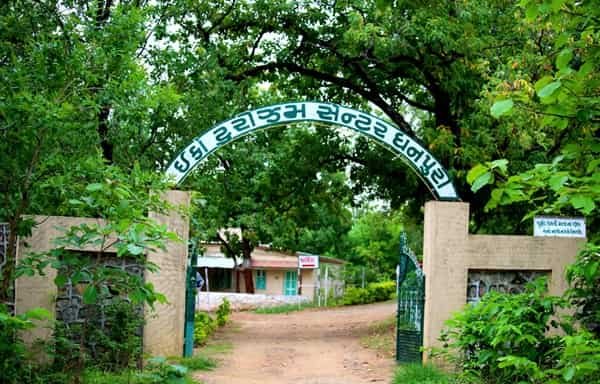
Jambughoda Wildlife Sanctuary is one of central Gujarat’s most appealing forest escapes because it combines wooded hills, reservoirs and wildlife within day-trip distance of Vadodara and Champaner-Pavagadh. The sanctuary covers about 130.38 sq km in Panchmahal district and protects a mixed forest landscape dominated by teak, mahua and bamboo. Gujarat Tourism highlights wild boar, nilgai, jackal, hyena, barking deer, four-horned antelope, sloth bear and leopard among the animals found in the wider sanctuary.
The destination is less about a single high-profile safari and more about spending time in a dry forest environment that changes dramatically with the seasons. Kada and Targol reservoirs add open water to the hilly terrain, supporting birds and creating scenic stopping points. Jambughoda also sits close enough to Champaner-Pavagadh that travellers can combine natural and heritage experiences, but the sanctuary deserves several hours of its own if birding, forest walking or photography is the main purpose.
Quick About Jambughoda Wildlife Sanctuary
| Detail | Information |
| Location | Panchmahal district, Gujarat |
| Protected Area | Wildlife Sanctuary |
| Area | 130.38 sq km |
| Sanctuary Status | 1990 |
| Landscape | Forested hills, mixed woodland and reservoirs |
| Known For | Sloth bear habitat, birds, teak-bamboo forest and Kada Reservoir |
| Distance from Vadodara | About 70 km |
| Distance from Champaner | About 20 km |
| Best Period | November to March |
| Visit Style | Day visit, forest sightseeing and nature observation |
Jambughoda Wildlife Sanctuary Timings
Gujarat Tourism currently lists Jambughoda Wildlife Sanctuary visiting hours as 6:00 AM to 7:00 PM. An early start is useful because the forest is cooler, bird activity is stronger and visitors have more time to explore without rushing.
| Day / Visit | Opening Time | Closing Time |
| Regular visiting hours | 6:00 AM | 7:00 PM |
| Recommended wildlife / birding start | 6:00 AM | 9:00 AM for the quietest conditions |
| Late-afternoon visit | Around 4:00 PM | Leave within official closing rules |
Forest staff may regulate access to individual tracks or reservoir-side areas according to current conditions. The published overall hours do not guarantee that every internal route remains open until 7:00 PM.
Jambughoda Wildlife Sanctuary Ticket Price
The current Gujarat Tourism sanctuary page publishes the visiting hours but does not display a current entry-fee amount. Rather than use an unverified third-party number as an official rate, the ticket table below reflects what can be confirmed safely.
| Charge | Current Information |
| Sanctuary entry | Fee may apply; current amount not published on Gujarat Tourism page |
| Vehicle / parking | Confirm locally |
| Guide / forest activity | Separate if arranged |
| Forest rest house / camping | Separate booking and tariff |
Carry cash and confirm charges at the entry point or with the forest office before travel if the exact budget matters. Rates quoted on older travel sites may not reflect the current forest tariff.
What to See at Jambughoda Wildlife Sanctuary
The sanctuary’s forested hills are the main attraction. Teak, mahua and bamboo create a dry woodland character that is quite different from India’s wetter rainforest sanctuaries. In winter, the combination of cooler weather and open forest makes exploration especially pleasant.
Kada Reservoir: The reservoir is one of the best-known scenic points in the sanctuary landscape and is associated with forest rest-house accommodation. Water attracts birds and can increase the chance of seeing animals near the edges.
Targol Reservoir: Another important water body in the protected landscape, adding wetland and open-view habitat to the surrounding forest.
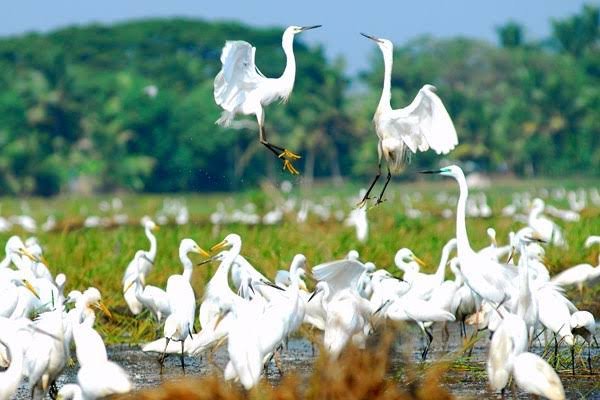
Birdwatching: Paradise flycatcher, golden oriole, tailorbird, green pigeon and other woodland birds are associated with the sanctuary. Winter reservoirs can also attract migratory waterbirds.
Forest wildlife: Nilgai, wild boar, jackal, hyena, barking deer, four-horned antelope and sloth bear occur here, while leopard is part of the wider carnivore community.
Tribal landscape: The Jambughoda region has long-standing tribal settlements, adding a cultural dimension to the wider area. Visitors should be respectful when passing through inhabited villages.
Wildlife and Forest Habitat
The sanctuary falls in a semi-arid biogeographic setting but supports significant mixed forest. Seasonal water availability strongly influences animal movement, particularly around reservoirs and forest streams. This is why dawn and the later afternoon can be more productive for wildlife watching than the hottest part of the day.
Sloth bears and leopards are shy and should never be treated as guaranteed sightings. For most visitors, deer, nilgai, monkeys, birds, reptiles and forest signs are more realistic observations.
How To Reach Jambughoda Wildlife Sanctuary
By Road from Vadodara
Vadodara is about 70 km away. A private car or taxi is the easiest option and also allows travellers to combine Jambughoda with Champaner-Pavagadh if desired. Start early to avoid turning the sanctuary into a rushed afternoon stop.
From Champaner-Pavagadh
Champaner is about 20 km from the sanctuary according to Gujarat Tourism. This makes Jambughoda a natural nature component in a two-day central Gujarat itinerary.
By Train
Vadodara Junction is the most convenient major railhead for travellers arriving from Ahmedabad, Mumbai, Surat or other cities. Shivrajpur is closer geographically, but long-distance travellers usually have more transport options from Vadodara.
By Air
Vadodara Airport is the nearest major airport. From the airport, continue by taxi for the road journey to Jambughoda.
Best Time to Visit Jambughoda Wildlife Sanctuary
Gujarat Tourism and Government of India tourism literature recommend November to March. Winter offers pleasant temperatures for forest walks, birdwatching and reservoir stops. It is also the period when migratory waterbirds can add interest to the lakes.
The monsoon and immediate post-monsoon period transform the forest into a greener landscape and can be attractive for scenery, but rain may affect internal roads. April and May are much hotter, so visitors in late spring should focus on early morning and avoid long midday outdoor exposure.
How Much Time to Keep for the Visit
Keep at least three to four hours for the sanctuary itself. Travellers who want to include both major reservoirs, birdwatching and a slow forest drive should allow half a day. If combining Jambughoda with Champaner-Pavagadh, an overnight stay in the region is far more relaxed than trying to cover everything between sunrise and sunset.
Visitor Facilities and Practical Tips
Carry water and food: Facilities within the forest are limited compared with a city attraction.
Use binoculars: They are useful both for forest birds and waterbirds around reservoirs.
Book forest accommodation ahead: Rest-house availability near Kada is limited and should not be treated as a walk-in hotel.
Keep fuel sufficient: Refuel before entering rural stretches rather than relying on a station near every forest point.
Drive slowly: Wild animals and villagers may use the same approach roads.
Check internal-route condition after rain: A general sanctuary opening does not mean every track is equally suitable for an ordinary car.
Important Rules for Visitors
Do not feed wildlife, leave the vehicle near a large animal, block an animal’s path or use loud music. Sloth bears in particular should be given a very wide distance. Never walk into an unapproved forest trail simply because it appears quiet.
Carry all waste out, avoid smoking and never light a fire. Reservoir banks can have unstable or slippery edges, so do not enter the water or approach steep banks without local guidance.
FAQs About Jambughoda Wildlife Sanctuary
Q. Can Jambughoda be visited together with Champaner-Pavagadh?
Yes. The two destinations are close enough to combine, but allow enough time. A rushed heritage visit followed by a late forest entry is less rewarding than staying overnight and giving each place its own half-day.
Q. Is Jambughoda a good destination for bird photographers?
Yes, especially around mixed forest and reservoir edges. Winter offers both woodland birds and potential migratory waterbirds. A vehicle plus short quiet stops can be more effective than continuous walking.
Q. Are sloth bears easy to see?
No. Jambughoda is known as sloth-bear habitat, but the animals are elusive and can be dangerous if surprised at close range. Never walk off-route specifically to search for a bear.
Q. Can visitors stay inside the sanctuary area?
Forest rest-house accommodation has traditionally been available near locations such as Kada, but it requires advance arrangements and availability confirmation. It should not be assumed to function like a normal hotel booking.
Q. Is Jambughoda suitable for small children?
A short road-based forest visit can work well for families. The main challenge is keeping children patient and quiet enough for wildlife viewing, and avoiding long outdoor stops in hot weather.
Q. Are restaurants available inside the forest?
Do not depend on finding a full restaurant within the sanctuary. Carry water and simple food, and plan proper meals in Jambughoda town, Champaner, Vadodara or your accommodation.