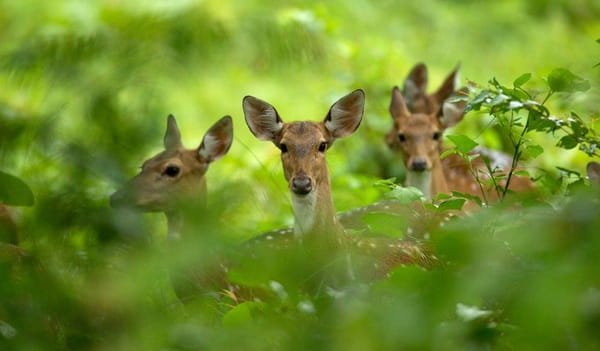
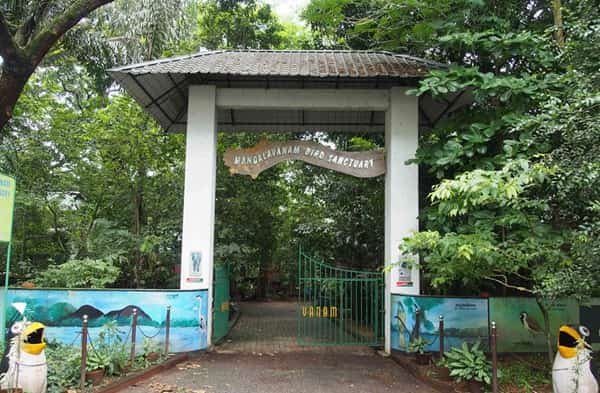
Sultanpur National Park is the most accessible serious birding destination in Haryana and one of the easiest protected wetlands to reach from Delhi-NCR. Located on the Gurugram-Farrukhnagar Road about 15 km from Gurugram, the park protects roughly 142.25 hectares of shallow wetland, grassland, scrub and scattered tree cover. Its compact size makes it very different from a large wildlife sanctuary: visitors can walk a loop around the wetland, stop at watchtowers and observe birds without spending an entire day on a safari vehicle.
The park has an unusually important conservation history for such a small site. The former Sultanpur jheel was brought to wider attention by ornithologists and conservationists in the late 1960s and early 1970s, became a protected bird sanctuary, and was later upgraded to a national park. In 2021 it was designated a Ramsar Wetland of International Importance. More than 250 resident and migratory bird species have been recorded in the landscape, with winter bringing ducks, geese, waders, raptors and other migrants along the Central Asian Flyway. The result is a destination that works equally well for first-time birdwatchers, photographers, school groups and experienced birders who know the value of returning to the same wetland through different seasons.
Quick About Sultanpur National Park
| Detail | Information |
| Location | Sultanpur, Gurugram district, Haryana |
| Protected Area | National Park and Ramsar Wetland |
| Area | About 142.25 hectares |
| National Park Status | 1991 |
| Ramsar Designation | 2021 |
| Known For | Migratory waterbirds, walking trail and watchtowers |
| Recorded Bird Diversity | More than 250 species |
| Distance from Gurugram | About 15 km |
| Distance from Delhi | About 45-50 km depending on starting point |
| Best Period | November to February for peak migratory birding |
Sultanpur National Park Timings
Current 2026 visitor information commonly lists Sultanpur National Park at around 7:00 AM to 4:30 PM during the birding season, with Tuesday as the weekly closure. The park also has an important seasonal shutdown: in 2026 it remained closed through the monsoon/off-season and reopened on October 1.
Because seasonal closure dates can be adjusted for habitat management, breeding or maintenance, anyone visiting near the opening or closing months should verify the status before travelling. Early morning remains the best period within the day, both for bird activity and for comfortable walking.
| Day / Season | Opening Time | Closing / Status |
| Wednesday to Monday, visitor season | Around 7:00 AM | Around 4:30 PM |
| Tuesday | Closed | Weekly maintenance closure |
| 2026 monsoon/off-season | Closed during the seasonal shutdown | Reopened October 1, 2026 |
| Best birding window | 7:00 AM | About 10:00 AM |
The exact seasonal closure window can change from year to year. Do not rely on an old blog post if you are planning a June-September visit.
Sultanpur National Park Ticket Price
Sultanpur has traditionally had a very low entry fee, but current online tariff information is inconsistent. Some visitor listings still show the long-standing rates of about ₹5 for an Indian adult, ₹2 for a child and ₹40 for a foreign visitor, while more recent on-ground reports have cited higher charges. The Haryana Forest Department public tariff document currently available online does not separately list an updated Sultanpur fee.
For accuracy, the table below treats those older figures as reference values rather than guaranteed 2026 gate prices. The amount displayed at the official ticket counter should be treated as final. Parking, binocular hire, camera permission or electric-cart services, if operating, may be charged separately.
| Visitor / Service | Planning Figure / Status |
| Indian adult entry | Legacy/current listings commonly show about ₹5; confirm at the gate |
| Child entry | Legacy listings commonly show about ₹2; confirm at the gate |
| Foreign visitor | Legacy listings commonly show about ₹40; confirm at the gate |
| Parking | Separate charge may apply |
| Camera / binocular / electric-cart service | Separate if applicable and available |
When Sultanpur reopened on October 1, 2026, authorities announced free entry for the first week as a reopening measure. That temporary concession should not be confused with the normal park tariff.
What to See at Sultanpur National Park
Sultanpur is designed for slow observation. A shallow lake occupies the heart of the park, with grass, mudflats, trees and scrub around it. As water levels change, different feeding areas appear for ducks, storks, waders and other birds. The open nature of the wetland makes it unusually beginner-friendly because many birds can be watched without entering dense vegetation.
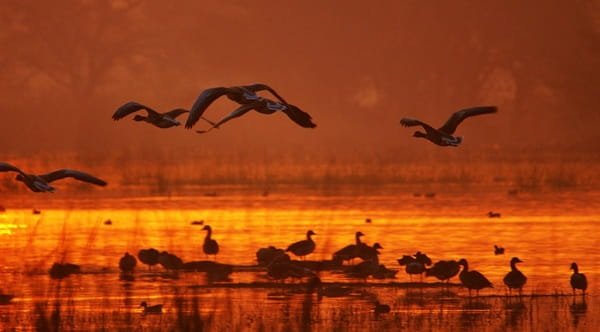
- Migratory waterbirds: Winter can bring northern pintail, Eurasian wigeon, common teal, bar-headed goose and other migrants that use the wetland as a feeding and resting site.
- Resident birds: Indian peafowl, red-wattled lapwing, cattle egret, white-throated kingfisher, cormorants, herons and many familiar north Indian species can be seen for much of the year.
- Watchtowers: Haryana Tourism lists four watchtowers positioned around the park. They allow visitors to scan the lake without repeatedly approaching the shoreline.
- Interpretation centre: The educational interpretation facility helps school groups and first-time visitors understand the wetland and identify common birds.
- Walking trail: A loop around the wetland gives the best overall experience. Walk slowly, stop often and let birds come into view rather than trying to complete the circuit quickly.
Why Sultanpur Is Ecologically Important
Sultanpur is small, but it lies on an important migratory route used by birds moving between Central Asia and the Indian subcontinent. Seasonal wetlands like this act as feeding and resting stations during long migrations. The habitat also supports amphibians, reptiles and small mammals and helps with local water retention and groundwater recharge.
Its Ramsar designation recognises this broader ecological role. The park is therefore more than a convenient picnic stop near Gurugram. Maintaining suitable water levels, quiet refuge areas and surrounding grassland is essential if the wetland is to continue supporting large concentrations of birds despite rapid urban growth in the NCR region.
How To Reach Sultanpur National Park
By Road
The park lies on the Gurugram-Farrukhnagar Road, about 15 km from Gurugram and roughly 45-50 km from central Delhi depending on the route. A private car or taxi is the most convenient option for an early-morning arrival.
By Metro
The Delhi Metro Yellow Line to Millennium City Centre Gurugram is the most practical metro approach for many visitors. From there, continue by taxi or app-based cab. The park is outside the walkable metro zone.
By Train
Garhi Harsaru Junction is the nearest useful railway station on the Delhi-Rewari line. Gurugram Railway Station is another option depending on the train.
By Air
Indira Gandhi International Airport is approximately 34-35 km away. Travellers with a morning birding plan should ideally stay in Gurugram or west Delhi the previous night rather than travel from the airport at dawn with luggage.
Best Time to Visit Sultanpur National Park
November to February is the strongest birding period. Winter migrants are present in greatest variety, mornings are cool and the light is excellent for photography. December and January can be foggy, however, so photographers may prefer a slightly later morning on days with heavy NCR fog.
October and March are also useful transition months. Some migrants are arriving or departing, and temperatures can still be comfortable. The monsoon/off-season is used for ecological recovery and maintenance, and the park can remain closed for an extended period; check the current season before planning.
How Much Time to Keep for the Visit
Two to three hours is ideal for most visitors. That gives enough time to walk slowly, stop at several watchtowers and spend time identifying birds rather than simply completing the circuit. Serious photographers may want three to four hours, particularly when bird activity is concentrated at one part of the wetland.
Visitor Facilities and Practical Tips
- Bring binoculars: They are the single most useful item at Sultanpur because many birds remain well away from the walking path.
- Arrive early: The first few hours after opening combine active birds, softer light and fewer visitors.
- Wear neutral clothes: Muted colours and quiet movement reduce disturbance and make birding more pleasant for everyone.
- Carry water: Basic facilities exist, but a reusable bottle is useful during the full walking circuit.
- Use a telephoto lens responsibly: Stay on the path and avoid crowding a nest or flushing birds simply to get a closer frame.
- Check air and fog conditions in winter: Dense NCR fog can reduce visibility even when bird numbers are excellent.
Important Rules for Visitors
Sultanpur is a protected wetland, not a petting or feeding area. Do not throw food to ducks, approach nesting birds, play bird calls loudly, leave the designated trail or drop plastic around the lake. Feeding can alter natural behaviour and attract birds into unsafe visitor areas.
Keep groups quiet near watchtowers and give photographers and birders space. Drones and commercial filming require permission. Do not enter during the seasonal closure even if the surrounding roads are accessible; the closure is intended to reduce disturbance and support habitat management.
FAQs About Sultanpur National Park
Q. Is Sultanpur National Park suitable for beginners in birdwatching?
Yes. The open wetland, walking trail and watchtowers make it one of the easiest places in NCR to learn common waterbirds. A basic pair of binoculars and a bird-identification app are enough to start.
Q. Can children comfortably walk around the park?
Most school-age children can manage the flat circuit, especially in winter. Take breaks at watchtowers and avoid trying to rush the entire loop with very young children.
Q. Are birds guaranteed in large numbers every winter day?
Birds are always free-ranging, and numbers change with water level, weather, migration and food availability. A good winter morning usually offers variety, but no species or flock size is guaranteed.
Q. Can visitors take food inside?
A small snack and water may be practical, but eating should be done responsibly and no food should be given to birds. Carry all wrappers back to a proper bin.
Q. Is Sultanpur useful for serious photography even though it is small?
Yes. The open wetland provides flight shots, reflections and waterbird behaviour, while the short walking distances let photographers revisit productive viewpoints. A 300-600 mm equivalent lens is especially useful.
Q. Can Sultanpur be combined with another Gurugram attraction on the same day?
Yes. A morning birding session often finishes before lunch, leaving the rest of the day free. The park is best treated as the first activity of the day rather than a late-afternoon add-on.