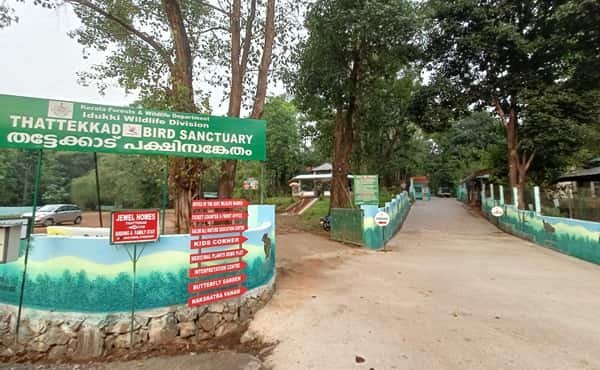
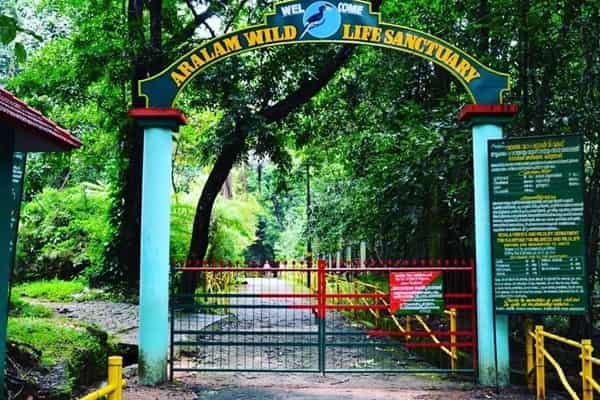
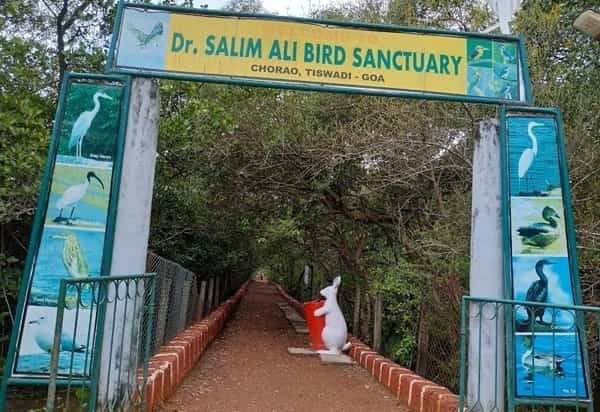
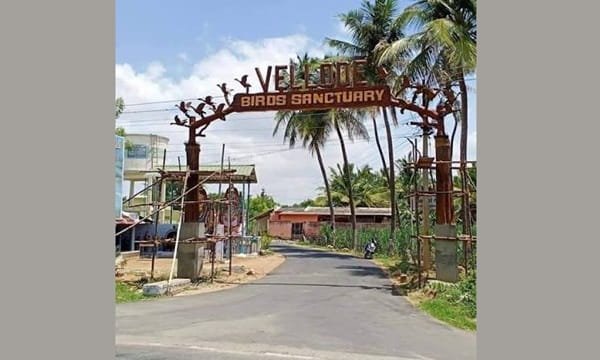
Vellode Bird Sanctuary is a small wetland with an importance far beyond its size. Located at Vadamugam Vellode near Erode, the sanctuary is centred on Periyakulam, a man-made irrigation tank surrounded by agricultural land and bird-friendly vegetation. The protected area covers 77.185 hectares and is particularly valuable as a feeding, resting and breeding site for resident and migratory waterbirds. In 2022 Vellode was designated a Ramsar Site, placing it among wetlands recognised internationally for ecological importance.
The experience here is quieter than a large forest sanctuary. Visitors mainly walk, scan the water and tree-covered edges, and spend time at observation points waiting for bird movement. Pelicans, openbills, darters, cormorants, teals, pintails, herons, ibises and other wetland birds may be seen depending on the water level and season. The Tamil Nadu State Wetlands Authority records 148 bird species for the site, along with fish, reptiles, amphibians, mammals and a diverse plant community. Because the sanctuary is only around 12-15 km from Erode, it works well as an early-morning half-day outing for birdwatchers, photographers and families who prefer a peaceful natural setting.
Quick About Vellode Bird Sanctuary
| Detail | Information |
| Location | Vadamugam Vellode, Perundurai Taluk, Erode district, Tamil Nadu |
| Type | Protected bird sanctuary and freshwater wetland |
| Area | 77.185 hectares |
| Ramsar Status | Ramsar Site No. 2475; designated on 8 April 2022 |
| Main Habitat | Seasonal freshwater wetland / irrigation tank, trees and surrounding farmland |
| Known For | Resident and migratory waterbirds, nesting and wetland bird photography |
| Recorded Birds | 148 species listed by the Tamil Nadu State Wetlands Authority |
| Best Birding Season | Mainly November to February; useful sightings can continue into April |
| Nearest Major City | Erode |
Vellode Bird Sanctuary Timings
The Erode district tourism page does not currently publish a separate official gate-timing table. Current public map listings commonly show the sanctuary open from early morning until late afternoon. Because local opening hours can change with maintenance, water conditions or departmental instructions, visitors making a special trip should confirm the day’s gate timing locally.
| Day | Commonly Published Visiting Hours | Planning Note |
| Monday to Sunday | Around 6:00 AM to 5:30 PM | Confirm the current gate schedule before travelling |
| Best birding hours | Early morning | Bird activity and light are generally better before the day becomes hot |
| Late afternoon | Useful for a shorter visit | Allow enough time to leave before the gate closes |
Vellode Bird Sanctuary Ticket Price
A reliable live visitor tariff is not presently published on the Erode district or Tamil Nadu wetlands pages checked for this guide. Older government-linked information described free entry, while more recent visitor reports mention a small admission charge. Rather than presenting an uncertain old rate as current, the safest approach is to confirm the fee at the entrance on the day of travel.
| Visitor / Service | Current Position |
| General visitor entry | Current official online tariff not clearly published; confirm at entrance |
| Children | Confirm current concession or child rate at the ticket counter |
| Camera / special equipment | Ask at the entrance if any separate charge currently applies |
| Binocular / visitor services | Availability may depend on the facility operating on the day |
What to See at Vellode Bird Sanctuary
Open-water and marsh birds: Water level strongly influences what visitors see. Pelicans, cormorants, teals, pintails, darters, coots, herons and other waterbirds use the tank and its shallow margins at different times of the year.
Roosting and nesting trees: Trees around the wetland provide important resting and nesting structure. During productive seasons, birds may gather in large numbers around quieter edges of the tank.
Watch points and interpretation facilities: The sanctuary has been developed for nature education with bird-viewing infrastructure and interpretation facilities, making it approachable even for visitors who are new to birdwatching.
Ramsar wetland landscape: Vellode is also worth seeing as a functioning irrigation wetland. Water storage, groundwater recharge, farming and wildlife are closely connected here, which makes the site useful for students interested in wetland ecology.
Smaller wildlife: The wetland authority records fish, reptiles, amphibians, mammals, butterflies and other invertebrates in addition to its bird diversity.
How To Reach Vellode Bird Sanctuary
By Road
Vellode is the easiest to reach from Erode. Government tourism information places the sanctuary roughly 12-15 km from the city on the Chennimalai side. Taxis, private cars and local road transport can be used, and the short distance makes an early morning visit practical even for travellers staying in central Erode.
By Train
Erode Junction is the most convenient major railway station and is around 15 km from the sanctuary according to the district tourism page. From the station, a taxi or auto-rickshaw is the simplest direct connection, especially before sunrise or early in the morning when bus frequency may be lower.
By Air
Coimbatore International Airport is the nearest major airport, approximately 90 km away according to Erode district tourism information. Continue by road to Erode and Vellode; an overnight stay in Erode is preferable if birdwatching is the main purpose of the trip.
Best Time to Visit Vellode Bird Sanctuary
November to February is the strongest general period because the cooler months bring migratory activity and more comfortable walking conditions. Tamil Nadu forest information has traditionally identified November to February as the key visiting season, while local district material notes that a variety of migratory birds may remain through March or April.
Early morning is more important than simply choosing a winter date. Birds are usually more active, temperatures are lower and the light is better for photography. Water level matters as well: because Vellode is a seasonal, rain-dependent wetland, bird numbers and the amount of open water can vary noticeably from one year to another.
Visitor Facilities and Practical Tips
Carry binoculars if possible; many birds remain across open water where naked-eye identification is difficult.
Use a telephoto lens rather than trying to move close to nesting or resting birds.
Wear a cap and carry water because shade can be limited around exposed parts of the wetland.
Neutral-coloured clothing and quiet movement improve the birdwatching experience.
Keep at least 90 minutes to two hours for a first visit instead of treating the sanctuary as a quick photo stop.
Check recent local conditions during very dry years because water level has a direct effect on bird concentration.
Important Rules for Visitors
Do not feed birds or throw food into the wetland.
Keep noise low near nesting, roosting and feeding areas.
Do not leave the visitor path or enter restricted wetland edges.
Avoid flash or close disturbance when photographing birds.
Carry back plastic bottles, wrappers and other waste.
Follow any temporary instructions issued by forest staff during breeding or maintenance periods.
FAQs About Vellode Bird Sanctuary
Q. Does the number of birds stay the same throughout winter?
No. Migratory movement changes through the season and the wetland water level also affects where birds gather. A productive visit in one month does not guarantee the same concentration several weeks later.
Q. Is Vellode useful for beginner birdwatchers?
Yes. The open wetland makes many larger waterbirds easier to observe than birds inside dense forest. A basic pair of binoculars and a bird-identification app or field guide are enough for a useful first visit.
Q. Can the sanctuary be visited comfortably with young children?
It can be a good family nature outing if children are comfortable walking quietly and staying near adults. The experience is observation-based rather than an amusement attraction, so shorter morning visits usually work best for younger children.
Q. Should photographers carry a tripod?
A tripod can help with long-lens photography, but it is not essential for casual visitors. Keep equipment compact enough that it does not block paths or encourage movement into sensitive birding areas, and follow any instructions at the entrance.
Q. Is birding still worthwhile outside the main migratory season?
Resident birds remain throughout the year, but the sanctuary is generally more rewarding during and after the northeast monsoon when water availability and migrant activity are stronger. Summer visits can be hotter and less predictable.