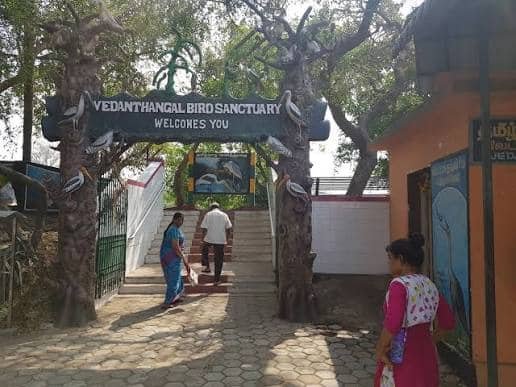
Kadalundi Bird Sanctuary is a coastal wetland where river, estuary, mangroves and the Arabian Sea meet south of Kozhikode. The area is spread across island clusters around the mouth of the Kadalundi River and is known for both resident birds and winter migrants. Terns, gulls, sandpipers, herons, cormorants and other shorebirds use the mudflats and waterways, while mangroves support fish, crabs and other estuarine life. Officially, the protected landscape forms part of the Kadalundi-Vallikkunnu Community Reserve, but it is widely promoted to visitors as Kadalundi Bird Sanctuary. Its appeal lies in the natural estuary rather than formal zoo-style exhibits, so tides, season and quiet observation shape the experience.
Quick About Kadalundi Bird Sanctuary
| Detail | Information |
| Location | Kadalundi, south of Kozhikode, Kerala |
| Protected Status | Kadalundi-Vallikkunnu Community Reserve |
| Landscape | River estuary, island clusters, mudflats and mangroves |
| Known For | Migratory shorebirds, terns, gulls, herons and estuarine biodiversity |
| Bird Diversity | More than 100 resident species and around 60 migratory species reported by Kerala Tourism |
| Best Season | November to April |
| Nearest Local Rail Stop | Kadalundi Railway Station |
| Nearest Airport | Calicut International Airport |
| Ideal Visit Duration | 2-3 hours; longer with a guided boat experience |
Kadalundi Bird Sanctuary Timings
A recent Kerala Tourism destination brochure lists the visitor timing below.
| Day | Opening Time | Closing Time |
| Daily visitor timing | 8:00 AM | 5:00 PM |
Note: Local operating hours for boat trips can depend on tide, weather and availability. Some map listings show earlier access, but the Kerala Tourism brochure is the safer published reference for general visitors.
Kadalundi Bird Sanctuary Ticket Price
Kerala Tourism currently lists no basic entry fee for the sanctuary/community-reserve visit.
| Visitor Access | Charge |
| General entry | No entry fee |
Note: Guided boating or locally arranged activities may involve a separate charge even when general entry is free. Confirm the price before boarding any boat.
What to See at Kadalundi Bird Sanctuary
Winter visitors can include terns, gulls, sandpipers, plovers, greenshanks, whimbrels and other shorebirds.
Cormorants, herons, kingfishers and raptors can be seen around the river, mangroves and mudflats.
Mangrove habitat supports otters and a wide range of fish, crabs and molluscs, adding to the ecological interest.
Hillocks around the area provide wider views across the estuary and Arabian Sea.
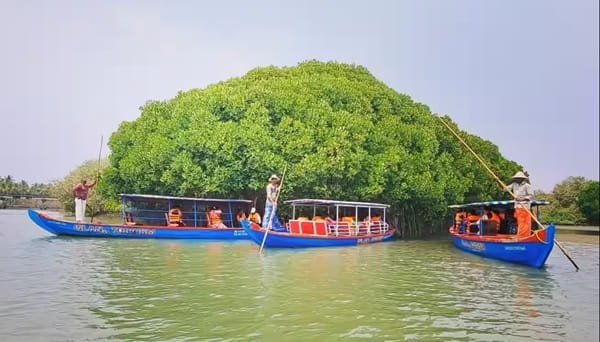
Forest Department-associated boat rides have been promoted as a way to experience the mangrove and island landscape from the water.
How To Reach Kadalundi Bird Sanctuary
By Road
Kadalundi lies roughly 20-25 km south of Kozhikode and is connected by local roads through the coastal belt. Taxi, private car and local bus services can be used from Kozhikode and nearby towns.
By Train
Kadalundi Railway Station is very close to the sanctuary area and is convenient if a suitable local train is available. Kozhikode Railway Station is the major rail hub, around 18-19 km away depending on the route.
By Air
Calicut International Airport is the nearest airport, roughly 21-23 km away depending on the approach used. A taxi is the simplest onward connection.
Best Time to Visit Kadalundi Bird Sanctuary
November to April is the best period for birdwatching because migratory species join the resident bird population. December to April is often highlighted for peak winter visitors. Early morning is usually best, but tide can be just as important as clock time for shorebirds because exposed mudflats create feeding areas.
Visitor Facilities and Important Rules
Carry binoculars because shorebirds may feed at a distance across mudflats or channels.
If taking a boat, use a local authorised operator and wear the provided life jacket throughout the ride.
Do not enter mangrove patches or mudflats simply to get closer to birds; these habitats are fragile and can also be unsafe.
Keep plastic, food waste and fishing-related litter out of the estuary.
Sun protection is important because much of the wetland viewing area is exposed.
Check tide and weather conditions before a photography-focused visit, especially during the monsoon transition.
FAQs About Kadalundi Bird Sanctuary
Q. Why does Kadalundi birding depend on the tide?
Many shorebirds feed on exposed mud and shallow edges. At very high tide those feeding areas can disappear, while a falling or lower tide may bring birds into more productive viewing zones.
Q. Is a boat ride necessary to enjoy Kadalundi?
No. Birdwatching is possible from land and viewpoints around the estuary. A boat can provide a different perspective on the mangroves and island channels but should be treated as an optional activity.
Q. Is Kadalundi suitable for wildlife photography with a normal phone camera?
Phones can capture landscapes and closer birds, but many shorebirds remain distant. Binoculars or a telephoto camera are much more useful if identifying or photographing individual species is important.
Q. Are there mosquitoes around the mangroves?
Mosquitoes and other insects can be present, particularly in humid conditions and around still water. A suitable repellent and light full-sleeve clothing can make a longer visit more comfortable.
Q. Can visitors walk onto exposed mudflats for photographs?
It is better not to. Mud can be unstable, tides can change and walking into feeding habitat disturbs birds. Use established paths, banks and authorised boat routes instead.