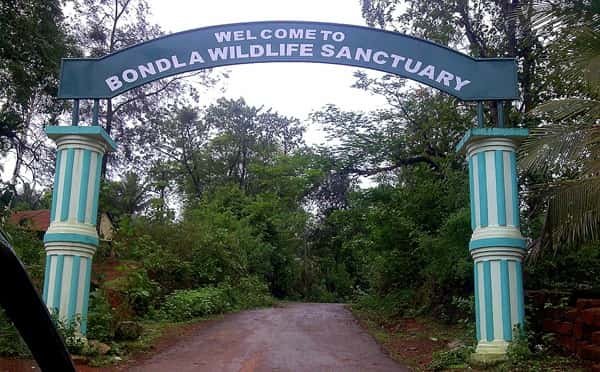
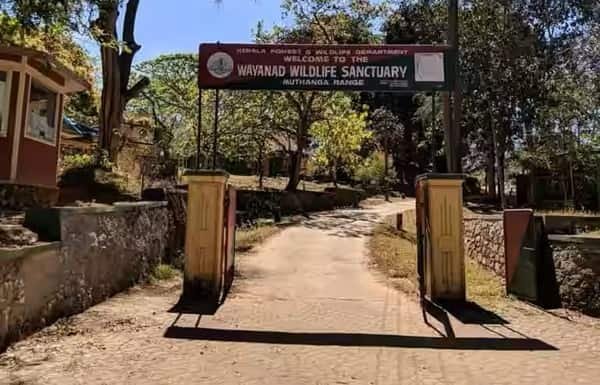
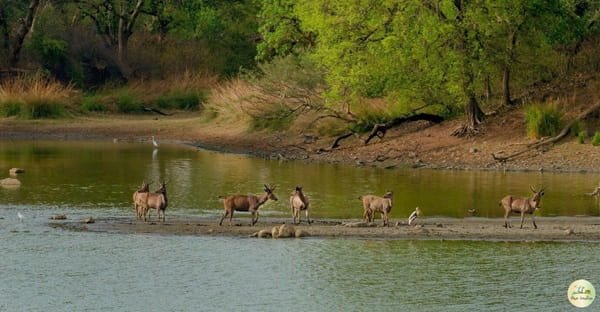
Asola Bhatti Wildlife Sanctuary is Delhi’s wild Aravalli edge rather than a conventional city park. Spread across the Southern Ridge near Tughlakabad and the Delhi-Haryana border, the protected landscape covers about 32 sq km of rocky hills, scrub forest, grassland, restored mining pits and seasonal water bodies. Its importance lies as much in habitat restoration as in wildlife viewing: the sanctuary protects one of the last substantial stretches of the Aravallis inside the capital and provides space for jackals, nilgai, spotted deer, porcupines, reptiles, butterflies and a wide range of resident and migratory birds. Visitors can choose the Tughlakabad eco-tourism zone, where the Conservation Education Centre, interpretation facilities and Butterfly Park are located, or the Asola zone associated with the long drive towards Neeli Jheel. Because this is a protected forest rather than an amusement attraction, the experience is quieter and sightings are never guaranteed. The low entry charge and online permit system make it an unusually accessible introduction to Delhi’s natural landscape, especially for families, students, walkers and birdwatchers who arrive early and are prepared for a mostly outdoor visit.
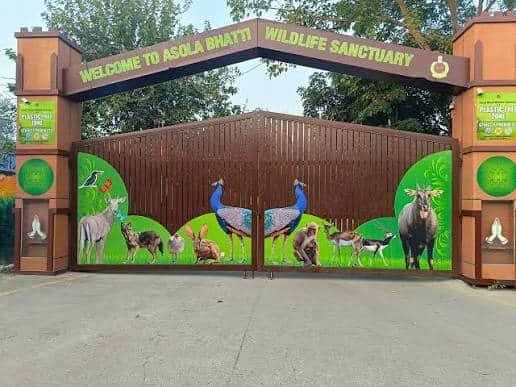
Quick About Asola Bhatti Wildlife Sanctuary
| Detail | Information |
| Location | Southern Ridge, Tughlakabad/Asola, South Delhi, New Delhi 110044 |
| Type | Wildlife sanctuary and Aravalli eco-tourism landscape |
| Approximate Area | About 32 sq km |
| Landscape | Rocky Aravalli ridge, scrub forest, grassland, restored mine pits and water bodies |
| Known For | Neeli Jheel, urban wildlife, birdwatching, nature trails and conservation education |
| Eco-tourism Zones | Tughlakabad Zone and Asola Zone |
| Open Days | Tuesday to Sunday; Monday closed |
| Best Season | October to March |
| Nearest Metro Options | Tughlakabad / Badarpur Border side for road connection; a cab or auto is still required |
Asola Bhatti Wildlife Sanctuary Timings
The sanctuary’s official visitor portal currently lists one regular visiting window from Tuesday to Sunday. Entry is closed on Monday, so visitors planning a weekend or weekday nature trip should use the online portal to check the selected zone and date before travelling.
| Day | Opening Time | Closing Time |
| Tuesday to Sunday | 7:00 AM | 3:00 PM |
| Monday | Closed | Closed |
A 3:00 PM closing time means this is best treated as a morning or early-afternoon outing. Visitors going towards Neeli Jheel should not arrive close to closing because the internal forest route takes time and access is controlled by the sanctuary authorities.
Asola Bhatti Wildlife Sanctuary Ticket Price
The current official fee page keeps the basic entry charge simple. Children below five years are stated to be free, while the published visitor categories are charged the same nominal entry fee.
| Visitor Category | Entry Fee |
| Adult – Indian or foreign visitor | ₹10 per person |
| Student – Indian or foreign visitor | ₹10 per person |
| Child aged 5 years and above | ₹10 per person |
| Child below 5 years | Free |
The same official fee page lists ₹10 for a camera/recording instrument. Vehicle-related charges are published separately, including ₹5 for LMV/SUV, ₹10 for HMV and no charge for a bicycle. These small add-on rates should still be checked on the booking screen because the final permit reflects the selected zone, vehicle and equipment details.
Online Booking and Entry Permit
Entry permits can be booked through the official Asola Bhatti Wildlife Sanctuary portal. The booking form asks visitors to choose an eco-tourism circuit, visit date, visitor details, vehicle details and the number of cameras or recording instruments. A single online application currently allows a maximum of 10 persons. Carry the permit and a valid identity document on the day of the visit, and arrive with enough time for checking at the gate.
What to See at Asola Bhatti Wildlife Sanctuary
The attraction is the landscape itself: a dry Aravalli forest system that looks very different from Delhi’s formal gardens. Wildlife can be scattered, so slow observation is more rewarding than expecting a safari-style sequence of animal sightings.
Neeli Jheel and the forest drive: The Asola zone includes the route towards Neeli Jheel, a striking water body inside the restored mining landscape. The official sanctuary site describes a roughly 14 km drive and notes that permits are required for vehicle access.
Conservation Education Centre: The Tughlakabad side has an education centre designed for students and visitors who want to understand Delhi’s ridge ecology, wildlife and restoration work.
Butterfly Park: A four-acre butterfly park with native host and nectar plants forms part of the eco-tourism facilities in the Tughlakabad zone.
Birds and mammals: Nilgai, jackal, spotted deer, mongoose and smaller mammals may be seen, while winter can bring additional raptors and migratory birds around the water bodies.
Aravalli terrain: Rocky slopes, thorn scrub, grass patches and reclaimed mine areas give the sanctuary a rugged character that is very different from a manicured urban park.
How To Reach Asola Bhatti Wildlife Sanctuary
By Metro and Local Transport
The sanctuary is in South Delhi near Tughlakabad and Surajkund Road. Metro users can approach from stations on the Violet Line side, including Tughlakabad or Badarpur Border depending on the chosen route, and then continue by auto-rickshaw or cab. The final approach is by road and the exact gate should be checked on the permit.
By Road
From central or south Delhi, the sanctuary can be approached through Mehrauli-Badarpur Road and Surajkund Road towards the Shooting Range/Asola side. The Delhi Forest Department also describes approaches from Tughlakabad and from Mehrauli via Chhatarpur. Traffic can be slow on weekends, so an early start is useful.
By Train
New Delhi, Hazrat Nizamuddin and other major railway stations are well connected to the Delhi Metro and cab network. For visitors carrying binoculars, water and other outdoor gear, a direct cab from the station is often the simplest option.
By Air
Indira Gandhi International Airport is roughly 25 km from the sanctuary area by the Forest Department’s general location guidance, although actual road distance and travel time vary by terminal and traffic. A cab is the most practical airport connection.
Best Time to Visit Asola Bhatti Wildlife Sanctuary
October to March is the most comfortable period for exploring the sanctuary. The cooler air makes walking easier, visibility is generally better and winter increases the variety of birds using the ridge and water bodies. November to February is especially pleasant for a slow morning visit.
Summer can be very hot on the exposed rocky terrain, and the 7:00 AM opening becomes particularly useful during April to June. The monsoon changes the look of the sanctuary dramatically as the ridge becomes greener, but rough ground can become slippery. In any season, arriving close to opening gives visitors more comfortable temperatures and better chances of seeing active birds and mammals before the day becomes warmer.
Visitor Facilities and Practical Tips
Book the correct eco-tourism zone before leaving home and save a copy of the permit on your phone.
Carry drinking water, sun protection and closed walking shoes; this is a rugged forest landscape rather than a paved garden.
Binoculars are more useful than relying on a phone camera for distant birds and mammals.
Allow extra time if your plan includes the Neeli Jheel route because the internal drive is much longer than a short walk around the entrance area.
Families with young children should keep the visit realistic: shade and facilities vary by zone, and long forest stretches may feel tiring in hot weather.
Keep expectations natural. The sanctuary is not a zoo and wildlife sightings depend on season, weather, movement and luck.
Important Rules for Visitors
Carry the approved entry permit and follow the zone and route mentioned on it.
Do not carry firearms, smoke, cook or light fires inside the sanctuary.
Pets are not allowed inside the protected area.
Do not litter. Visitors are expected to take non-biodegradable waste back out or use designated bins.
Keep noise low; unnecessary horn use, loud music and disturbance to wildlife are prohibited.
Vehicles must remain on designated routes and must not be driven off-track.
FAQs About Asola Bhatti Wildlife Sanctuary
Q. Can a visitor drive a private car to Neeli Jheel?
Vehicle access is possible on the permitted internal route, but it is controlled. Select the appropriate Asola/Neeli Jheel circuit while booking and enter vehicle details in the permit application. Do not assume that a car can be taken anywhere in the sanctuary.
Q. Is Asola Bhatti suitable for a school nature visit?
Yes. The Conservation Education Centre and interpretation facilities make the sanctuary particularly useful for organised nature education. Larger school groups should coordinate in advance rather than arriving as an unplanned group.
Q. Are wildlife sightings guaranteed on the Neeli Jheel drive?
No. Animals move freely through a large protected landscape. A quiet early visit improves the experience, but visitors should value the habitat, birds, geology and restoration work even when larger mammals stay out of sight.
Q. Can visitors take DSLR cameras inside?
Cameras are allowed subject to the declared equipment details and the applicable instrument fee. Professional filming or a shoot with specialised equipment may require separate permission beyond a normal visitor permit.
Q. Is the sanctuary easy for a person with limited mobility?
The entrance and vehicle-based portions may be manageable for some visitors, but the sanctuary includes uneven natural ground and long outdoor stretches. Anyone who needs step-free access or mobility assistance should contact the sanctuary office before booking a specific zone.
Q. Can food be taken inside for a picnic?
The sanctuary is a protected wildlife area, not a picnic ground. Carry only what is necessary for the visit, keep food securely packed and never feed wildlife. All wrappers and waste should leave the forest with you.